Hey everyone, welcome back. Grab your coffee, and let's jump into what’s been happening in the wild world of tech. It’s been one of those weeks where you see the full spectrum of human ingenuity—from clever apps that solve a real-world problem to ideas that feel straight out of a science fiction novel.
We’re going to cover a bit of both today. First, a really cool story about a couple of underdogs who built the best weather app on the internet. Then, we’ll take a turn into the slightly more bizarre and talk about why on earth people are choosing to freeze their brains. Let’s get into it.
How Two Ski Bums Built the Internet's Best Weather App
You’d think the most accurate snow forecast would come from a huge government agency or a big-name weather company, right? I mean, they have the satellites, the supercomputers, the whole nine yards.
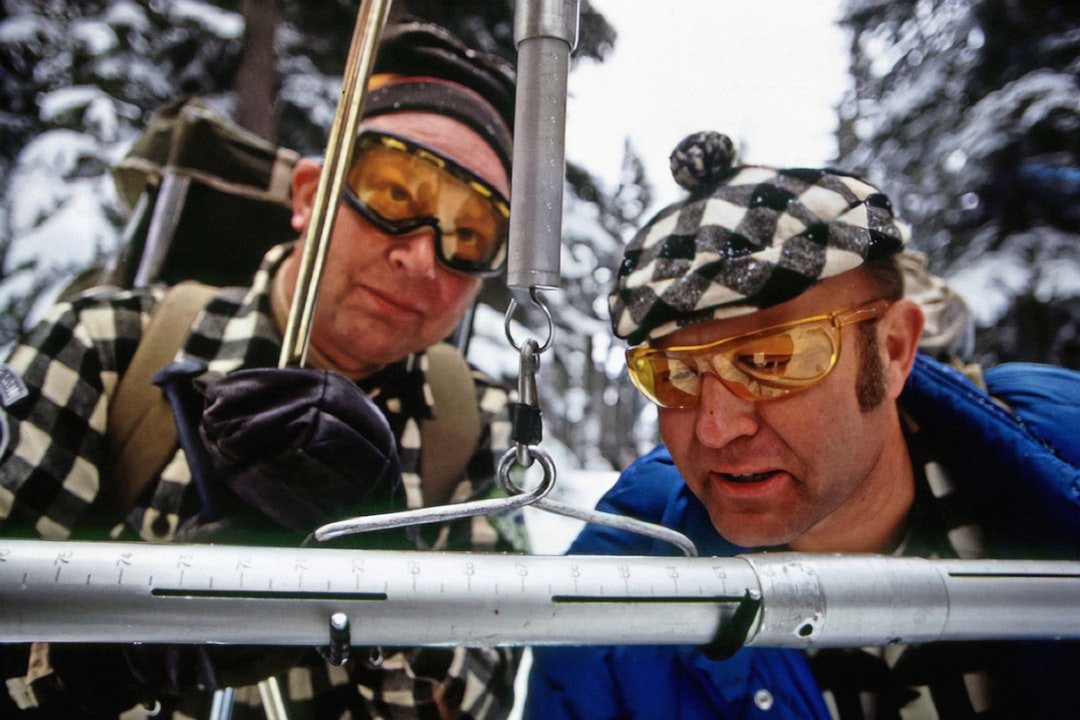
Well, you’d be wrong. The best snow-forecasting app for skiers, hands down, is a startup called OpenSnow. And the story behind it is just fantastic. It was started by a couple of ski bums who were just tired of getting bad forecasts. So, they decided to build a better one themselves.
They take all that public government data, run it through their own custom AI models, and then—here’s the secret sauce—they add decades of their own on-the-mountain experience. The result? Predictions that are so good, they’ve become absolutely essential, especially during a wacky winter like the one we just had.
What’s really cool is that their forecasters have become minor celebrities in the ski world. These folks aren't just reading a computer screen; they're digging through mountains of data to write "Daily Snow" reports that people genuinely trust. We actually sent a writer out to the mountains in Tahoe to hear the full story of how two broke skiers became the snow gods of the modern era. It’s a great read.
Why Would Anyone Freeze Their Brain?
Alright, let's shift gears from the mountains to the cryo-lab. This is a topic that always fascinates and slightly creeps me out in equal measure: cryonics.
You’ve probably seen it in movies—the idea of freezing a human body (or just the brain) with the hope that future technology might one day bring them back to life. It sounds like pure sci-fi, but there are people, right now, who are genuinely signing up for this.
I was reading a piece this week about L. Stephen Coles, a researcher who studied aging and was so interested in the field that he had his own brain preserved. It got me thinking: what’s the real motivation here?
Everyone involved, from the people running the facilities to the folks who want to be frozen, admits the chances of this working are incredibly, vanishingly small. So why do it? Is it a desperate bet on the future? A rejection of the finality of death? It's a complex and deeply human question, and the full story explores the mindset of those who take this ultimate leap of faith.
What's Next for Us in Space?
From the far future to the near future, let's talk about space. There is so much happening up there right now. We're in a new race to see if there’s life on Mars, we're actively trying to figure out how to stop a killer asteroid (a real-life Don't Look Up scenario), and we're making serious plans to put a permanent base on the moon.
All of this can tell us a lot about where we're headed as a species. To get a better handle on it all, our features editor, Amanda Silverman, recently sat down with Robin George Andrews, a fantastic science journalist. If you missed their chat, don't worry—you can catch the whole video. It’s a subscriber thing, but it’s worth it if you’re as big of a space nerd as I am.
Quick Hits from Around the Web
Alright, here’s a quick rundown of some of the other important, weird, and fascinating stories I’ve been tracking for you.
- A Big Win for Anthropic. A judge just hit the pause button on the Pentagon's move to ban the AI company, calling it a potential attempt to "cripple" them. This legal battle is getting intense.
- Elon Musk's Lawsuit Flops. Remember when Musk sued an organization that highlighted the advertiser boycott on X? Yeah, a judge tossed that out, basically calling it a "fishing expedition." Ouch.
- OpenAI Pumps the Brakes on Erotic Chatbots. Apparently, there were some internal concerns, so plans for an "adult" AI companion are on hold "indefinitely." Seems they're making a pretty big strategic shift.
- Helium Shortage Hitting Tech. This isn't just about party balloons. Helium is crucial for a lot of tech manufacturing, and a shortage stemming from conflict in the Middle East is starting to cause real problems for supply chains.
- Trump's New Science Advisors. His list of potential science advisors is... interesting. It includes 12 tech executives, nine of whom are billionaires, and only a single academic.
- Anthropic Eyeing an IPO? The AI race is heating up on Wall Street, too. Word is that Anthropic might be looking to go public as soon as this October, trying to beat OpenAI to the punch.
- Wikipedia Says NO to AI Content. The editors at Wikipedia are officially overwhelmed by AI-generated nonsense and have banned it. It’s a huge statement about the ongoing crisis of AI and truth.
- OpenAI Makes Bank on Ads. In less than two months, OpenAI's pilot ad program has already pulled in $100 million. Get ready to see ads on the free version of ChatGPT very soon.
- The Phone-Free Village. An entire village in Ireland has collectively decided to give their kids a phone-free childhood. The amazing part? It's working because pretty much everyone is on board.
- Your AI Might Be Making You Meaner. A new study found that chatting with an overly agreeable, sycophantic AI can actually encourage you to be less kind and exhibit "uncouth behavior" in the real world. Something to think about!
Quote of the Day
Speaking of that Anthropic drama, here’s a line that really stood out:
"I don’t know if it’s ‘murder,’ but it looks like an attempt to cripple Anthropic.”
That was from Judge Rita Lin, as she ruled against the Pentagon's ban. It perfectly captures just how high-stakes the AI competition has become.
And One More Thing...
Just when you think you’ve seen every crazy idea, someone comes up with a space habitat that builds itself.
Seriously. The International Space Station is great, but it can only fit about 11 people. A research lab called Aurelia Institute is working on a solution: a habitat that launches as a compact stack of tiles and then self-assembles once it's in orbit. It sounds like something out of a movie, but NASA is already backing the concept. Wild stuff.
Let's End on a High Note
Okay, that was a lot of tech news. To cleanse the palate, here are a few fun things I found this week. We can still have nice things, after all.
- These optical illusions will absolutely melt your brain. You've been warned.
- Take a trip down memory lane with the web design museum, which shows how our favorite sites have evolved over the years.
- I’m loving the modernist illustrations of Zara Picken. They’re a beautiful window into the mid-20th century.
- And if you want to get lost for a bit, explore this digital Knowledge Garden that visualizes the connections on our planet.
That's all for now. Thanks for reading, and I'll catch you next time