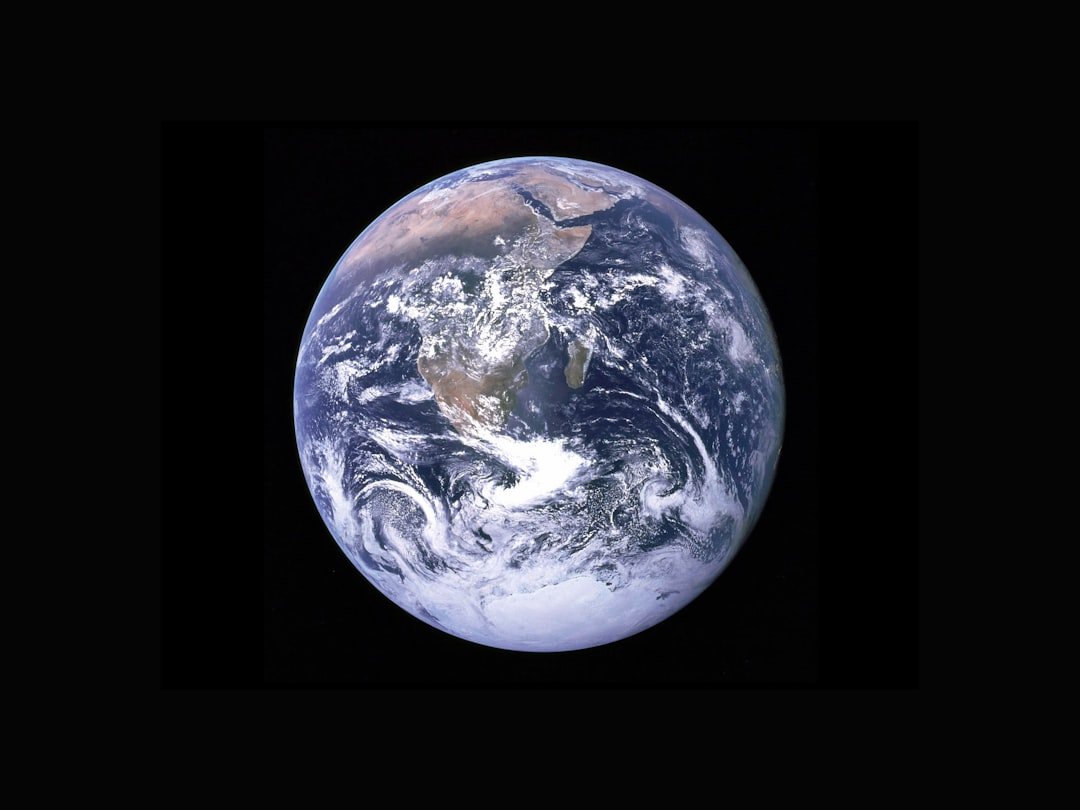
Ever just look up at the night sky and feel a sense of calm? Just you, the stars, and the quiet vastness of space. It feels so peaceful, so empty.
Well, I hate to be the one to burst that bubble, but it’s not so quiet up there anymore. Just beyond the thin layer of air that keeps us all alive, we’ve built a buzzing, invisible shell of technology. It’s like a massive, high-tech highway system circling our planet, and in the last few years, the traffic has gotten absolutely insane.
We started this project way back in 1957, launching our very first piece of gear into orbit. And since then, let's just say we’ve made it a habit.
So, What Exactly Is Orbiting Earth?
If you could see it all, it would be pretty breathtaking—and maybe a little terrifying. We’ve got incredible telescopes peering out into the deepest corners of the universe, untangling the mysteries of creation. We even have a small group of humans living in a metal bubble, the International Space Station, zipping around the planet.
But the real story, the one that’s changing everything, is the satellite boom.
Just five years ago, there were around 3,000 active satellites orbiting Earth. That sounds like a lot, right? Well, hold on. Today, that number has skyrocketed to about 14,000. And it’s still climbing, fast.
It’s an explosion of activity, and it’s happening right over our heads.
The Rise of the "Megaconstellations"
So, what’s causing this sudden orbital traffic jam? The biggest reason is something called “megaconstellations.”
Think of it like this: instead of launching one big, powerful satellite to do a job, companies are now launching hundreds or even thousands of smaller, cheaper ones that all work together as a team.
The most famous example, by far, is Elon Musk’s Starlink. The whole point of Starlink is to blanket the globe with high-speed internet, reaching places that have never had it before. It’s a genuinely ambitious goal. To pull it off, though, they need a massive fleet of satellites.
How massive? Starlink by itself accounts for nearly 10,000 of the satellites currently in orbit. Let that sink in. One single company has launched more satellites than the entire world had in orbit just a handful of years ago. It's completely changed the game.
Here’s the Catch: The Space Junk Problem
Now, all this technology is amazing. It gives us things we rely on every single day. If you use GPS to find your way, check the weather forecast before you leave the house, or even just make a phone call, you’re using a satellite.
But there’s a dark side to all this activity. For every shiny, new satellite we launch, we’re also creating garbage. A lot of it.
Imagine a construction site where nobody ever cleans up. Old parts, dropped tools, and random debris are just left lying around. Now imagine that construction site is orbiting the Earth at over 17,000 miles per hour. That’s basically what we’ve created.
Right now, there are an estimated 50,000 pieces of space debris larger than a baseball whipping around up there. And it gets worse. There are about a million more objects bigger than a coin.
At those speeds, even something as small as a coin can hit with the force of a bowling ball. A baseball-sized chunk of junk could obliterate a multi-million dollar satellite in an instant. If these things start crashing into each other, they create even more debris, setting off a dangerous chain reaction.
This isn’t some far-off sci-fi problem. It's a real and present danger to the very technology that powers our modern world. All those weather forecasts and digital communications we love? They depend on a clear and safe path through orbit.
Scientists have a name for this ever-thickening shell of human-made stuff we've wrapped around our home. They call it the anthroposphere—the sphere of human influence. It’s a powerful reminder that our reach no longer ends at the edge of the sky. We've built a new layer to our world, and now, we have to figure out how to live with it, and more importantly, how to keep it from turning into a cosmic junkyard.