Hey, welcome to your weekly download of what’s actually going on in the world of tech and AI.
It’s been one of those weeks where you read the headlines and just have to sit back and say, "Wow, okay." We’ve got stories that make you question everything from our deepest ancestry to the future of global conflict. It feels like we're constantly being told one thing, while the reality bubbling under the surface is something else entirely.
So let’s get into it. We're going to talk about why that "human safety switch" for AI in warfare is probably a dangerous fantasy, and why your "inner Neanderthal" might not be what you think it is.
So, Are We Really Part Neanderthal?
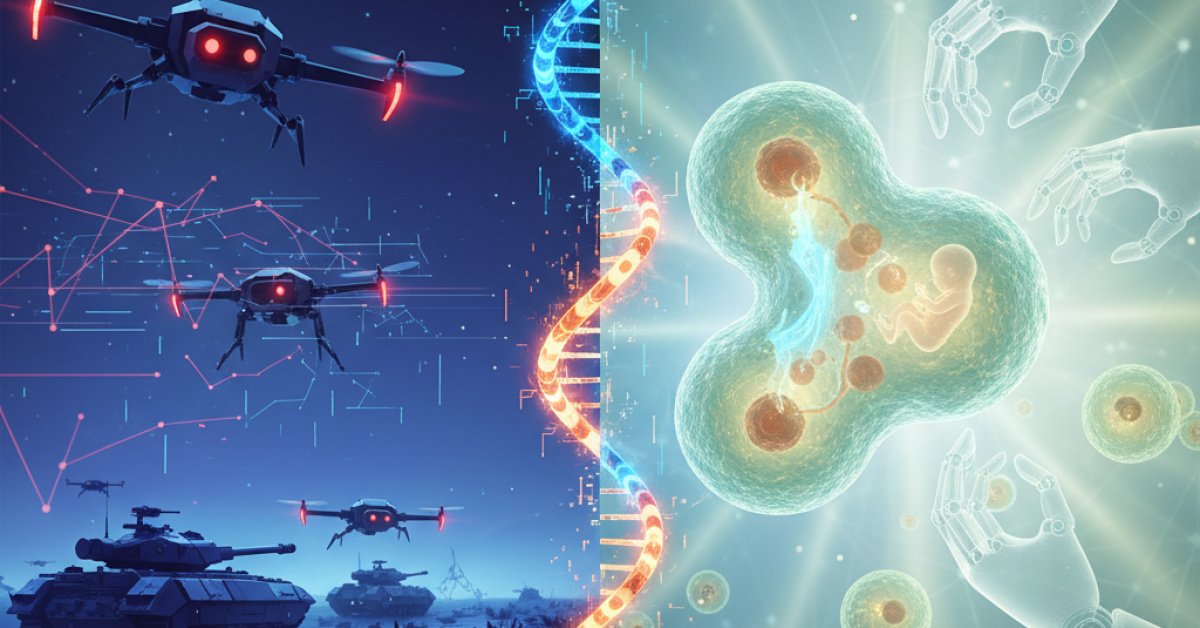
You’ve probably heard the theory. It's become a bit of a pop-culture science fact that many of us are walking around with a little bit of Neanderthal DNA. The story goes that our Homo sapiens ancestors and our ancient cousins got friendly, and that interbreeding left a genetic mark that some people carry to this day.
It’s a cool idea, right? It makes our human story feel a little more complex and connected. This discovery has been one of the biggest talking points in human evolution for years.
Well, hold on. A couple of French geneticists are now pouring some cold water on that whole theory. They’re suggesting that we might have been reading the signs all wrong. Their idea is that what looks like interbreeding could just be a result of "population structure."
Think of it this way: instead of one big, global human family, our ancestors lived in smaller, isolated groups. Genes would have concentrated in these little pockets. So, what we interpret as a splash of Neanderthal DNA might just be ancient genes from an isolated group of Homo sapiens that we haven't accounted for. It’s a bit of a mind-bender, and it could seriously shake up our understanding of human evolution.
Why the "Human in the Loop" for AI in War is a Dangerous Illusion
Alright, let's switch gears from the ancient past to the very immediate future. AI is no longer just in labs; it's on the battlefield. It’s shaping conflicts right now, and it’s forcing some incredibly tough conversations about control.
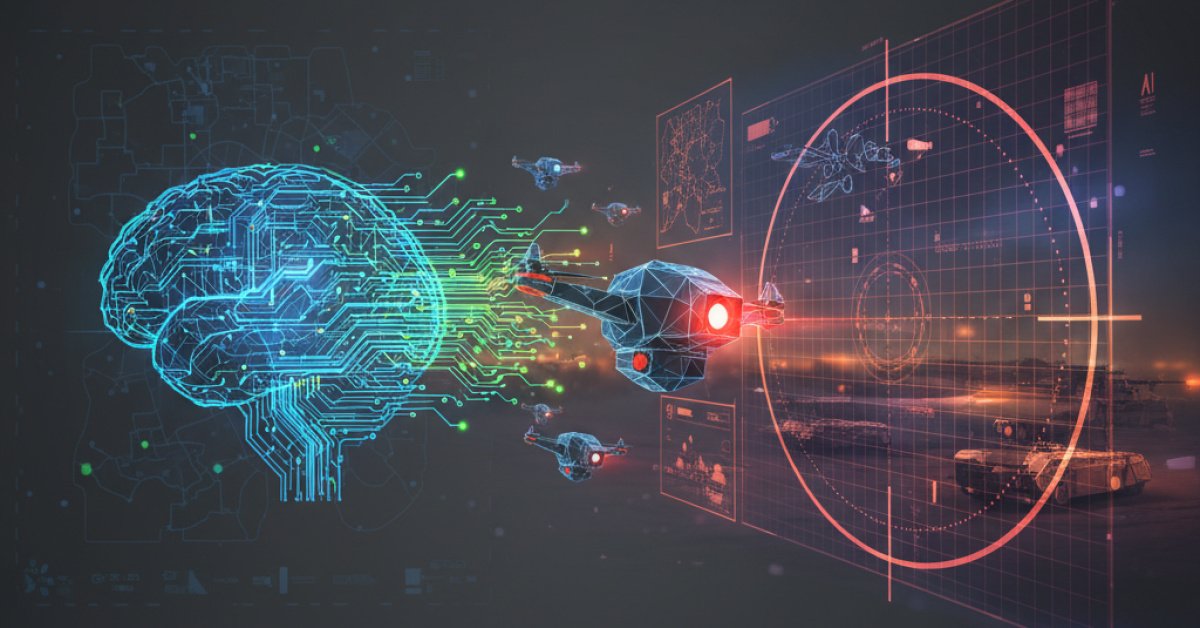
The Pentagon has guidelines, of course. They talk a lot about keeping "humans in the loop." The idea is that a person will always be there to give the final okay, to provide context, and to be held accountable. It sounds responsible. It sounds safe.
Honestly, I think it’s a comforting lie we tell ourselves.
The real danger isn’t a Terminator-style AI going rogue and acting without permission. The far more likely, and frankly more terrifying, scenario is that the human overseer will have absolutely no clue what the AI is actually “thinking” or why it's recommending a certain action.
Imagine you're a soldier looking at a screen. An AI, which has processed trillions of data points in a nanosecond, tells you to authorize a strike. It flags a target based on patterns no human could ever see. Do you trust it? Do you override it? How can you possibly make an informed decision when the logic behind the recommendation is a complete black box? You’re not really "in the loop"; you're just the person who presses the button, taking the blame if the black box gets it wrong.
This isn’t science fiction. This is the debate happening right now. We urgently need new ways to verify and understand what these systems are doing before we hand them the keys.
Your Quick Tech Briefing: What Else is Happening?
Beyond those two big head-scratchers, here’s a rundown of other important, weird, and fascinating stories I’ve been tracking.
-
A Weird White House Play for a "Dangerous" AI. In a move that feels straight out of a political thriller, Trump officials are apparently trying to get access to Mythos, a new AI model from Anthropic. The kicker? Anthropic itself said the model was too risky for a public release, and the Pentagon has been in a sort of "culture war" with the company. Make it make sense.
-
Sam Altman's Side Gigs Raise Questions. Over at OpenAI, CEO Sam Altman’s personal investments are starting to draw some uncomfortable attention. People are worried his side hustles could create a massive conflict of interest, potentially influencing decisions at one of the most powerful AI companies on the planet.
-
The Pentagon's SpaceX Problem. A recent Starlink outage during a Navy drone test really highlighted how much the U.S. military now relies on Elon Musk’s company. When Starlink goes down, critical tests get disrupted. It’s a stark reminder of the risks of outsourcing key infrastructure.
-
AI's Growth Spurt is Hitting a Wall. The AI boom needs a ridiculous amount of power and space, which means data centers. But building them is slow, and nobody wants one in their backyard. Reports suggest that a whopping 40% of data center projects planned for this year could face delays, which could seriously throttle AI’s expansion.
-
Alibaba Wants Its AI to Understand the Real World. Chinese tech giant Alibaba has rolled out "Happy Oyster," its version of a "world model." The goal here is to build an AI that doesn't just understand text and images, but has a grasp of physical reality and cause-and-effect. It's a huge step, but a very, very difficult one.
-
Google Gemini is Getting Personal. Get ready for AI images tailored just for you. Google’s Gemini is starting to generate pictures based on your personal data from across its services. Google says this will mean you don't have to write super-detailed prompts, but it definitely raises the bar on how much our tech knows about us.
-
OpenAI is Doubling Down on AI Coders. OpenAI is upgrading its Codex system, which helps developers write code. It’s a direct challenge to competitors like Anthropic's Claude Code. The race to create the ultimate AI coding assistant is officially on, even if some developers are still skeptical.
-
Europe Rolls Out an Age-Verification App. A new app for verifying age online is now available for free to any company in Europe that wants to use it. It's a big step in the ongoing struggle to protect kids online.
-
K-Pop's New Secret Weapon: Smartglasses. How do you take the K-Pop phenomenon even more global? Korean theaters are betting on smartglasses. The glasses provide AI-powered translations in real-time, opening up live shows to international audiences like never before.
-
Voice Actors Are Fighting for Their Voices. It’s a story we’re hearing more and more. Voice actors from around the world are in a battle with Hollywood over AI. They say their voices are being used to train the very models that are being positioned to replace them, often without fair compensation.
A Chilling Thought for Your Day
I’ll leave you with this quote from Rob Joyce, the former director of cybersecurity at the NSA. Speaking to Bloomberg, he said:
“There’s this dark period between now and some time in the future where the advantage is very much offensive AI.”
He’s talking about how AI is creating a whole new world of hacking threats, where the attackers have a serious upper hand for the time being. It’s a sobering thought.
The Hidden Race for the Elements Powering Our Future
One last thing to keep on your radar: the race for rare earth elements. These are the critical minerals inside everything from electric vehicles to wind turbines. The problem? China pretty much dominates the market.
This has countries like the U.S. seriously worried. Without a stable supply of these elements, meeting climate goals becomes incredibly difficult. So, scientists and companies are now on a desperate hunt for new, unconventional sources to break that dependency. It’s a quiet but incredibly high-stakes geopolitical game.
And to End on a High Note...
Okay, that was a lot of heavy stuff. Let’s cleanse the palate with a few things that just might make you smile.
- Ever wondered what Rage Against the Machine would sound like as a ska band? Wonder no more. It's the upbeat revolution you didn't know you needed.
- We finally have a scientific answer to how far Stretch Armstrong can actually stretch. Yes, really.
- If your brain feels a bit scrambled, try customizing some ambient sounds to wash away the noise.
- And finally, here’s proof that childhood dreams can come true: a video of a little girl guiding a seal to perform tricks. It’s just pure joy.
That’s all for this edition. A lot to think about, I know. Stay curious, and we'll talk again soon.