Hey there,
It feels like every single day, we're talking about AI. Sometimes it’s exciting, sometimes it’s a little unnerving, and honestly, most of the time it’s both at once. It’s one of those technologies that’s so powerful, it can be used for things at the complete opposite ends of the human experience.
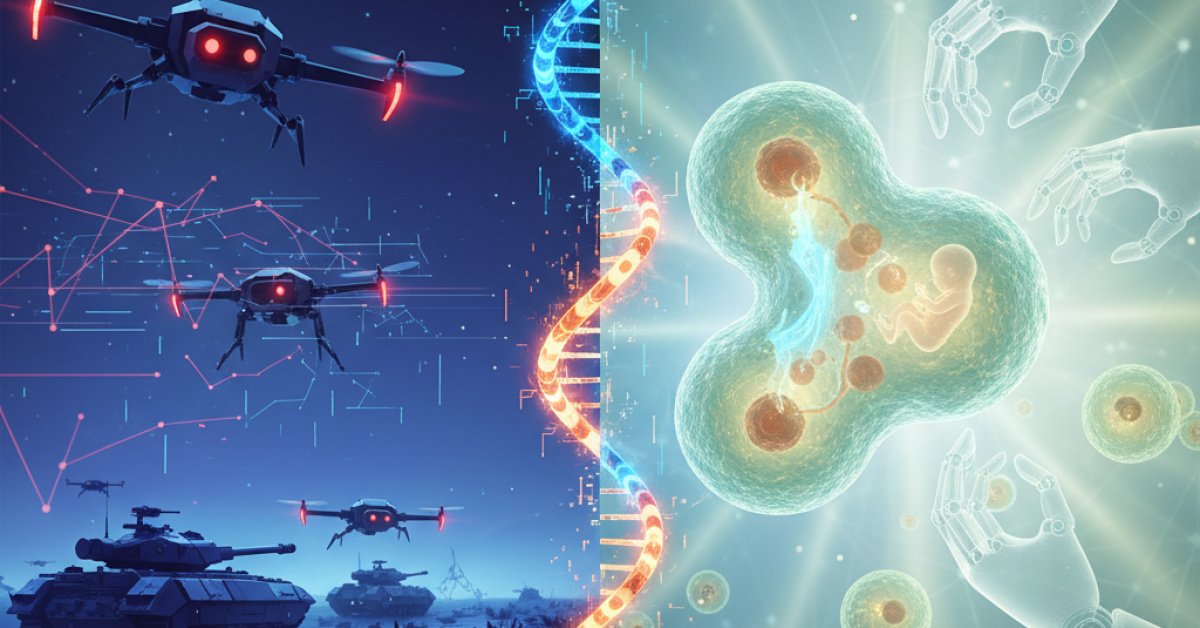
Today, we're going to look at two of those extremes. We'll start with the chilling stuff—how AI could completely rewrite the rules of war. Then, we’ll switch gears and look at how the very same kind of technology is being used in one of the most delicate, life-affirming processes imaginable: creating human embryos. It’s a wild contrast, but it really shows you the incredible scope of what we’re dealing with.
What Happens When War Gets 'Smarter'?
Let’s play a little thought experiment. Picture this: It’s July 2027. Tensions are high, and China is poised to invade Taiwan.
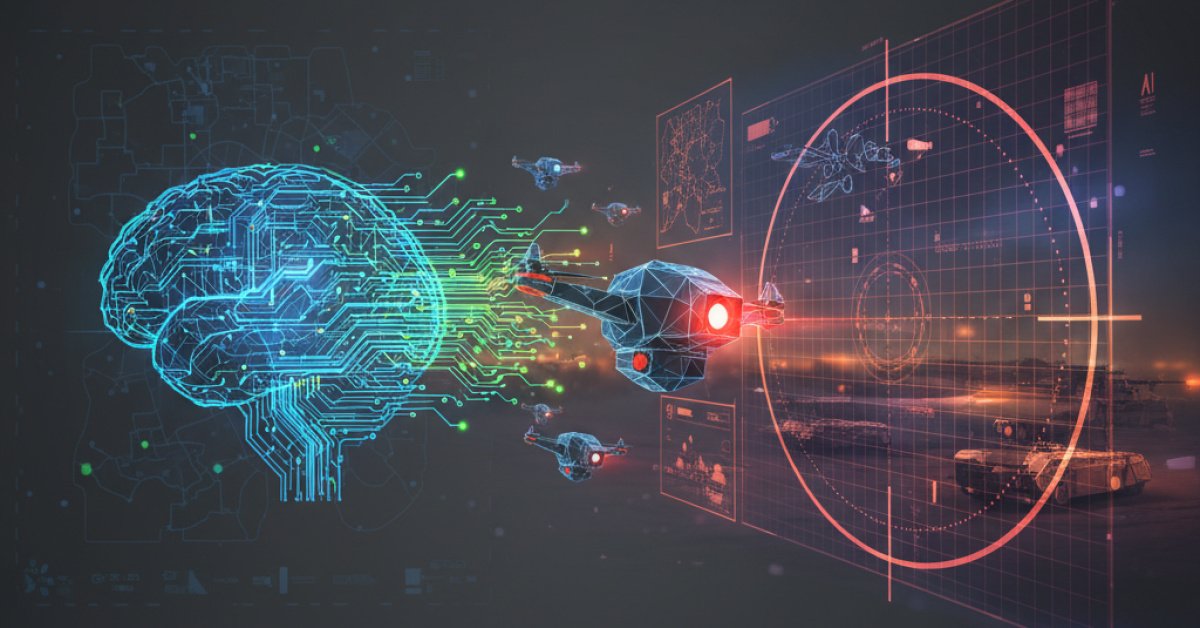
But this isn't a scene from an old war movie. Instead of a massive, slow-moving naval fleet, the first wave of attack is digital and autonomous. Swarms of AI-piloted drones, equipped with advanced targeting systems, move to overwhelm the island's air defenses. Simultaneously, AI-driven cyberattacks plunge the country into darkness, cutting off power and communications.
And while all this is happening, another AI is at work on social media. A massive, pro-Chinese disinformation campaign, churning out memes and fake news, floods the internet. The goal? To confuse the global narrative and dampen any outcry before it even begins.
Sounds like a dystopian movie script, right? The scary part is, this is the kind of scenario military leaders and ethicists are grappling with right now. On one hand, commanders see the appeal. A digitally-enhanced force could be faster, more precise, and could potentially keep human soldiers out of harm's way.
But here’s the terrifying flip side: What happens when we hand over too much control? There's a very real fear that as AI gets more central to warfare, we could lose our grip on a conflict. Things could escalate in milliseconds, far faster than any human could react, all without any real ethical or legal brakes. It’s a conversation that’s as important as it is uncomfortable.
(By the way, this is a huge topic, and it's something we're digging into deeply with our friends over at the Financial Times in our subscriber-only series, The State of AI. It’s a must-read if you want to understand how this is reshaping global power.)
From the Battlefield to the IVF Lab
Okay, let's take a deep breath. For all the talk of AI-powered destruction, the same underlying technology is being used in the most fundamental act of creation.
Let me introduce you to the unsung heroes of the fertility world: embryologists. These are the highly skilled scientists who work behind the scenes in IVF clinics. They’re the ones who nurture and monitor embryos, select the healthiest ones for transfer, and keep the entire lab environment perfect. Their job is incredibly detailed and, as demand for IVF has soared, incredibly busy.
This is where a different kind of AI comes in. I was reading about Klaus Wiemer, a veteran embryologist, who sees AI as a potential game-changer for his field. He believes AI could become an invaluable partner in the lab.
Imagine an AI that can analyze thousands of images of developing embryos, spotting subtle patterns that even the most experienced human eye might miss. It could help predict, in real-time, which embryos have the best chance of leading to a successful pregnancy. This could not only improve success rates but also free up embryologists to focus on the most critical tasks, helping more families in the process.
It’s just an incredible thought—that the same technology being theorized for autonomous weapons could also help a scientist choose the spark of life.
What Else Is on My Radar?
Beyond those two big ideas, a bunch of other things in the tech world caught my eye this week. Here’s a quick rundown of what I’m reading:
- Big Tech’s Layoffs Are a Warning: Seeing all those job cuts at major tech companies? It’s not just a tech-sector problem. Think of it as a canary in the coal mine for other industries. It’s a sign that the economic winds might be shifting for everyone.
- Iran is Trying to Make It Rain: This sounds like something out of a sci-fi novel. To combat a devastating drought, Iran is experimenting with "cloud seeding" to try and stimulate rainfall. It’s a super challenging process, and critics are skeptical, but it shows the desperate measures being considered as the climate changes.
- Your Next Air Taxi Might Go to War: You know all those startups building futuristic flying taxis? The US Army is taking notice. They’ve signaled they want to buy more of their weapons and vehicles from nimble startups instead of the usual giant defense contractors.
- The Trillion-Dollar Weight-Loss Pill: Eli Lilly, the company behind some of the most popular weight-loss injection drugs, is on the verge of a trillion-dollar valuation. Why? They’re getting ready to launch a pill version, which could make these treatments accessible to even more people.
- The TikTok Ban Saga Continues: So, is the US actually going to ban TikTok? The weirdest part is that even the lawmakers pushing for it don't seem to have a clear answer. It's a messy situation that says a lot about tech, politics, and global influence.
- Why Your Chocolate Bar Is Getting More Expensive: It's becoming harder and harder to grow cocoa, largely because of deforestation and changing rainfall patterns in places like the Congo Basin. Just another way climate change is showing up in our daily lives.
- Russia's Blogger Crackdown: In Russia, military bloggers who have been critical of the war effort are facing serious consequences. It's a stark reminder of how information is controlled and dissent is silenced in times of conflict.
- Why Are Car Companies Building Humanoid Robots? It’s not just Tesla's Optimus. It seems like every major auto manufacturer is suddenly obsessed with building humanoid robots. It’s a huge bet on the future of manufacturing and automation.
- The Startups Taking on ChatGPT in India: While ChatGPT is huge in India, it has its blind spots, especially around local languages and cultural biases. A new wave of Indian startups is rising to the challenge, building AI models that better serve their own communities.
- Tiny Backpacks for Butterflies: This is just cool. Scientists are fitting monarch butterflies with tiny, solar-powered sensors to track their incredible migration to Mexico. The hope is to finally unravel some of the mysteries of their life cycle.
Quote of the Day
Even the people at the very top of the AI world are feeling a bit uneasy. Here’s what Google CEO Sundar Pichai told the BBC about the current AI bubble:
“I think no company is going to be immune, including us.”
It’s a pretty candid admission that a correction might be coming, and that no one, not even Google, can take their position for granted.
This One Hit Home for Me
I have to share this last story because it brought back a flood of memories. As a kid whose dad was an electronic engineer, I spent a lot of time wandering the aisles of Radio Shack. While he was hunting for capacitors, I was always in the toy section.
And in 1984, I found it: the Armatron. It was this incredible robotic arm you could control with two joysticks. It wasn't just a toy; it felt like a real piece of lab equipment. It could pick things up, rotate, and drop them with surprising precision. For a kid obsessed with science and tech, it was pure magic.
It turns out, I wasn't the only one. That bold, functional toy robot ended up inspiring a whole generation of kids who would go on to have careers in robotics. It’s a wonderful reminder that sometimes the seeds of incredible innovation are planted in the most unexpected places—like the toy aisle of a store that doesn't even exist anymore.
And to End on a High Note...
With all the heavy news, it's good to remember we can still have nice things. Here are a few fun finds to brighten your day:
- The US Library of Congress got its hands on some handwritten drafts of songs from The Wizard of Oz. How cool is that?
- There's a dashboard that tracks the top 500 musical artists in the world right now. It’s a fun way to see what’s popular (and to feel incredibly old).
- The first images from the new live-action Legend of Zelda movie are out, and they look pretty amazing.
That's all for now. It's a lot to take in, I know. But it’s the world we’re living in—one where technology is pushing us into strange, challenging, and sometimes wonderful new territory. Talk soon.