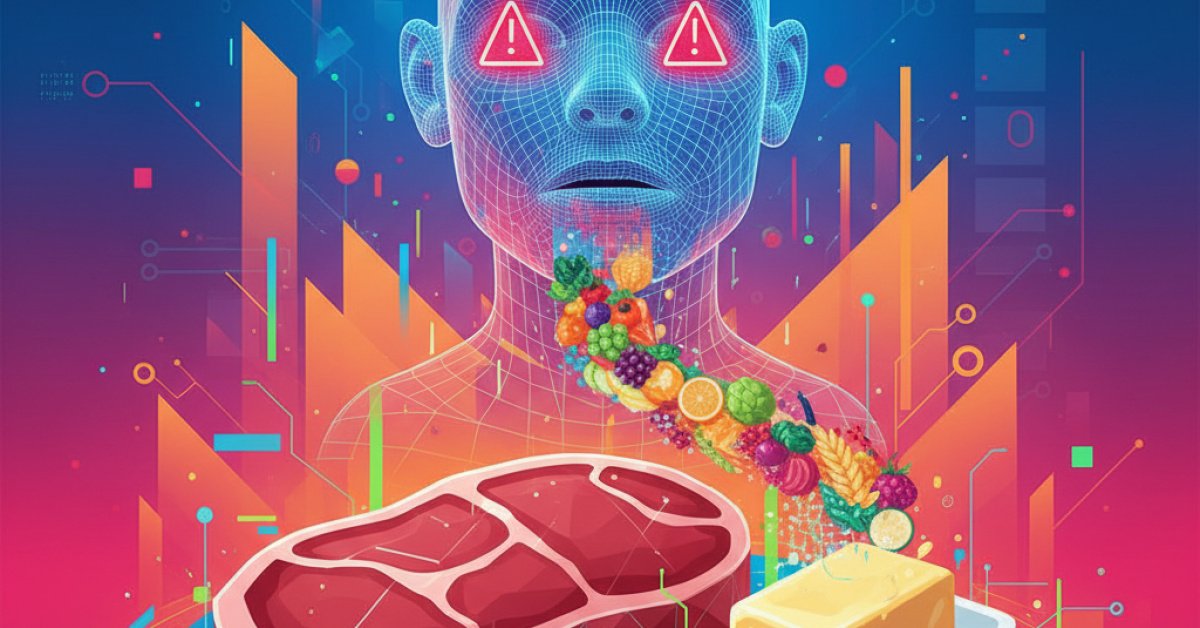
Have you ever felt like you’re getting whiplash from health advice? One day coffee is good for you, the next it’s bad. Don’t eat eggs. No, wait, eat all the eggs! It’s confusing enough trying to keep up with the latest science.
But what happens when the official advice from the government suddenly does a complete 180, seemingly ignoring decades of research?
Well, that’s exactly what just happened. It’s early 2026, and the U.S. Departments of Health and Human Services and Agriculture just unveiled the new dietary guidelines for Americans. And frankly, they are causing a stir for some pretty wild reasons.
These guidelines are a huge deal. They don't just sit on a shelf; they shape what millions of kids eat in school lunches and influence massive food assistance programs. You’d expect them to be the gold standard of nutritional science. Instead, the new advice is recommending we lean into foods like red meat, butter, and even beef tallow.
Yes, you read that right. Foods that most nutrition experts have been telling us to limit for years are now getting a prime spot. It feels like we’ve time-traveled back to the 1950s. So, let's unpack what’s going on, because this is a story about more than just food—it’s about a process that seems to have gone completely off the rails.
How We Got Here (And Why This Is So Weird)
First, a little context. These government dietary guidelines have been around since the 80s and get a refresh every five years. It’s usually a long, careful process. A team of top-tier nutrition scientists spends years combing through all the latest research. They publish a massive scientific report with their findings, and then, about a year later, the official, consumer-friendly guidelines are released.
The last set of guidelines covered 2020-2025. The scientific report for the new guidelines was actually finished and published way back in 2024. Everything was on track.
But then… silence. The government shutdown last year delayed the release, and nutrition experts were left waiting. They were expecting some tweaks, of course. Science evolves. For instance, there's growing evidence that there’s really no "safe" amount of alcohol. We're also learning more about the risks of ultra-processed foods. Some even hoped to see environmental sustainability factored in for the first time.
What we got instead was… not that.
The Good, The Bad, and The Just Plain Baffling
To be fair, not all the advice is bad. The new guidelines still give a thumbs-up to a diet packed with whole foods, especially fruits and vegetables. They recommend we avoid highly processed junk and added sugars. They also highlight the importance of protein, whole grains, and healthy fats.
So far, so good. No arguments there.
But then things take a sharp turn. The centerpiece of the new guidelines is a "new pyramid" of foods. It’s an inverted triangle, and right at the top, in the most prominent positions, are "protein, dairy, and healthy fats" and "vegetables and fruits."
There are a couple of huge problems here.
First, the pyramid itself. Remember those clunky food pyramids from the 90s? Nutrition scientists moved on from that design ages ago because, let’s be honest, they were confusing. Nobody knew what a "serving" was.
That’s why for the last decade, we’ve had "MyPlate"—a simple, intuitive graphic of a dinner plate. It shows you that half your plate should be fruits and veggies, with the other half split between grains and protein. It’s easy to understand. It just works.
Gabby Headrick, a food and nutrition policy expert at George Washington University, points out how strange it is to go back to a pyramid. "We’ve been using MyPlate... in a very consumer-friendly... way for over the last decade now," she says. It feels like swapping your smartphone for a flip phone. Why go backward?
Let's Talk About That Steak and Butter
The real shocker is what’s in the pyramid. The top-left image, the first thing your eyes land on, is a juicy steak. And smack in the middle? A stick of butter.
This is a massive departure from previous advice. While red meat and full-fat dairy can be part of a diet, they’re also high in saturated fat, which is linked to cardiovascular disease—the number one killer in the U.S. Back in 2015, the World Health Organization even classified red meat as "probably carcinogenic to humans."
The new guidelines also have a very generous definition of "healthy fats," lumping butter and beef tallow in with things like olive oil. This is just… not accurate.
Let’s break it down simply:
- A tablespoon of olive oil has about 2 grams of saturated fat.
- A tablespoon of beef tallow has about 6 grams.
- A tablespoon of butter has about 7 grams.
As Headrick puts it, "I think these are pretty harmful dietary recommendations to be making when we have established that those specific foods likely do not have health-promoting benefits."
And the weirdness doesn't stop there. The advice on alcohol is wishy-washy, just saying "consume less alcohol," which leaves you wondering… less than what?
A Protein Puzzle and an Opaque Process
The guidelines also tell Americans to ramp up their protein intake to between 1.2 and 1.6 grams per kilo of body weight. That’s 50% to 100% more than previously recommended.
José Ordovás, a senior nutrition scientist at Tufts University, warns this could easily push people’s calorie and saturated fat intake to unhealthy levels. It's a risky suggestion that doesn't seem to have a clear scientific backing.
So, the million-dollar question is: where did these changes come from?
They certainly weren't in the 2024 scientific report that was supposed to be the foundation for these guidelines. The evidence on red meat and saturated fat hasn't magically changed in the last year.
When journalists (including the one who wrote the original piece I'm basing this on) reached out to the scientists who actually worked on the 2024 report, they were met with silence or frustration. No one would go on the record, but the vibe was clear. One simply described the process for creating these new guidelines as "opaque."
Think about that for a second. These scientists poured years of their lives into a thorough, evidence-based review. And it seems like their work was just tossed in the bin and replaced with something else entirely.
"I’m not surprised that when they see that [their] work was ignored and replaced with something [put together] quickly, that they feel a little bit disappointed," says Ordovás.
It’s a story we see all too often, not just in nutrition but across many fields. A rigorous, data-driven process gets hijacked, and the result is confusing, potentially harmful, and erodes public trust. When guidance from the highest levels of government seems to contradict the very experts it hired, it leaves all of us wondering who to believe. And that might be the most unhealthy outcome of all.