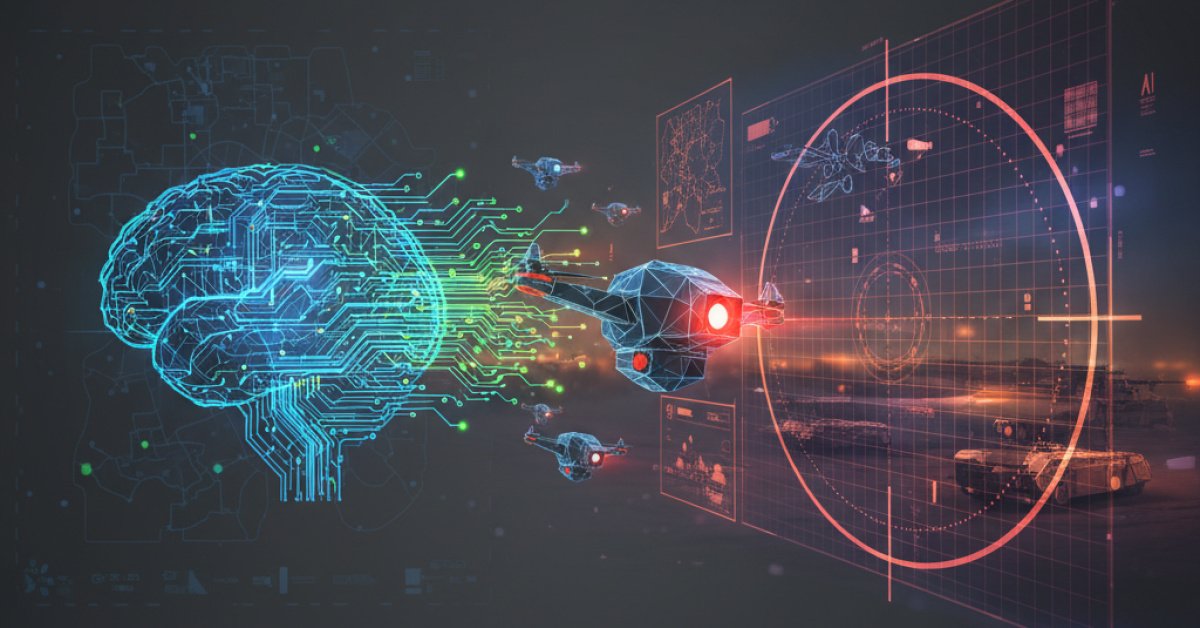
It feels like just yesterday we were all marveling at AI's ability to write a poem or plan a vacation itinerary. We chat with these large language models (LLMs) on our phones and computers, treating them as clever, sometimes quirky, digital assistants. But while we were asking ChatGPT for dinner recipes, a very different kind of AI was learning a far more lethal skill on a sun-baked airstrip in Texas.
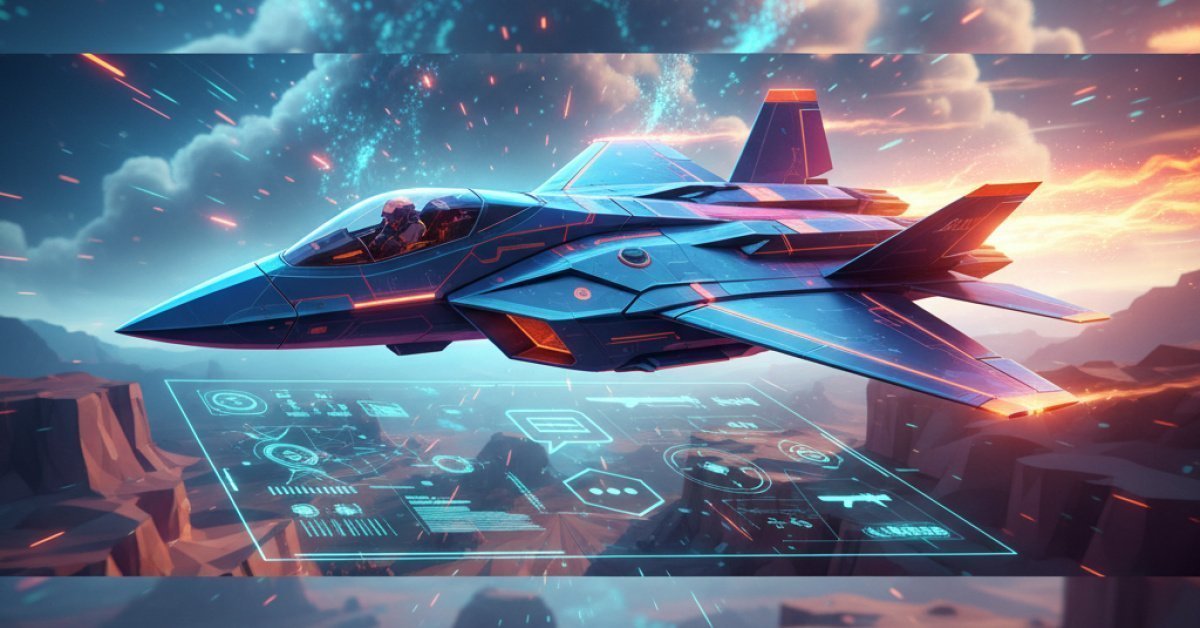
Imagine a swarm of fighter jets streaking across the sky, executing complex tactical maneuvers with inhuman speed and precision. Now, imagine the "pilot" in the lead aircraft isn't a person at all. It's an algorithm—a direct descendant of the same technology that powers the chatbots we use every day.
This isn't a scene from a new Terminator movie. This is the reality of the U.S. military's latest experiments, where an AI successfully controlled a tactical jet in a simulated combat scenario. It's a technological leap that's both awe-inspiring and deeply unsettling, forcing us to confront a future that has arrived far sooner than anyone expected. Let's break down what’s really going on.
What Exactly Happened at Edwards Air Force Base?
The story that sounds like science fiction unfolded at Edwards Air Force Base in California, home to some of the most advanced flight testing in the world. The star of the show was the X-62A VISTA, a specially modified F-16 fighter jet designed to test autonomous flight software.
This wasn't just a simple flight from point A to point B. The AI was put through its paces in a series of complex, within-visual-range combat simulations, often called "dogfighting."
The Brains Behind the Operation: DARPA's ACE Program
This groundbreaking test was part of the Air Combat Evolution (ACE) program, run by the Defense Advanced Research Projects Agency (DARPA). If you're not familiar with DARPA, they're the Pentagon's blue-sky research division, responsible for developing everything from the internet's precursor (ARPANET) to GPS. When they're involved, you know it's serious.
The goal of ACE is to automate air-to-air combat and build human trust in AI as a battlefield partner. For years, they've been running simulations, pitting AI agents against top human F-16 pilots in virtual dogfights. The AI consistently won. The Texas flight was the moment this technology graduated from a simulator to a real, multi-million dollar fighter jet.
Who's AI Was It Anyway?
The AI agent in the cockpit was developed by a company called Heron Systems. While the exact architecture is classified, officials have confirmed it's a version of a large language model. This is the key takeaway: the foundational tech is similar to what you'd find in consumer AI, but it has been hyper-specialized and rigorously trained for one thing and one thing only: aerial combat.
During the tests, the AI-controlled X-62A went nose-to-nose with a human-piloted F-16. It performed aggressive maneuvers, reacted to the other jet's moves, and made tactical decisions in real-time. All while two human pilots sat in the cockpit, ready to take over if anything went wrong (thankfully, they didn't have to).
Why Put an AI in the Cockpit in the First Place?
This all begs a massive question: why? Why hand the controls of a sophisticated killing machine to an algorithm? The answer lies in the brutal mathematics of modern warfare.
Human pilots, no matter how skilled, have physical and cognitive limits. They can only withstand so many G-forces, and their brains can only process information so quickly. In a dogfight, decisions are made in fractions of a second. This is where the concept of the "OODA loop" comes in.
- Observe: See what the enemy is doing.
- Orient: Understand the context and your options.
- Decide: Choose a course of action.
- Act: Execute the maneuver.
An AI can cycle through this loop thousands of times faster than a human. It doesn't get tired, it doesn't get scared, and it can process data from hundreds of sensors simultaneously. In a future conflict, the side that can make better decisions faster will have an overwhelming advantage.
Furthermore, the military envisions a future of "man-machine teaming." The AI isn't meant to completely replace the human pilot but to act as a tireless, brilliant co-pilot or a "loyal wingman." The AI could control a swarm of uncrewed drones, handle defensive systems, or execute complex maneuvers, freeing up the human pilot to focus on the bigger strategic picture—the mission, the ethics, and the ultimate decision to use lethal force.
This Isn't Your Average ChatGPT
It's easy to hear "large language model" and picture an AI that might get confused about facts or "hallucinate" non-existent information. The idea of that kind of system controlling a weapon is terrifying, and for good reason.
But it's crucial to understand that a military-grade AI is a different beast entirely. Let's use an analogy. A consumer LLM like ChatGPT is like a brilliant, well-read university student. It has a vast, general knowledge but lacks deep, practical expertise in any one area.
The AI flying the X-62A is more like a Formula 1 driver who has spent 100,000 hours in a simulator and on the track. It doesn't know how to write a sonnet or explain quantum physics. Its entire "world" is flight dynamics, sensor data, and combat tactics. It has been trained, tested, and constrained within an incredibly narrow and specific domain. Safety protocols and ethical guardrails are, theoretically, baked into its core programming.
This specialization is key. The AI isn't "thinking" in a human sense; it's executing the optimal strategy based on its training and the real-time data it's receiving. It's a tool, albeit an incredibly sophisticated and autonomous one.
The Human Element and the Ethical Minefield
Of course, the moment an AI can control a weapon, we walk into a profound ethical minefield. The Pentagon has repeatedly stated its policy is to always have a "human in the loop" for lethal decision-making. The pilot in the command aircraft or a commander on the ground would still be the one to grant permission to fire.
But technology has a way of outpacing policy. What happens when a conflict moves so fast that waiting for human approval means certain defeat? This is the central debate around Lethal Autonomous Weapons Systems (LAWS).
We're forced to ask some incredibly difficult questions:
- Accountability: If an autonomous weapon makes a mistake and hits a civilian target, who is responsible? The programmer? The commander who deployed it? The AI itself?
- Escalation: Could the speed of AI-driven warfare lead to rapid, uncontrollable escalation, as machines react to machines without human temperance?
- Proliferation: What happens when this technology gets into the hands of non-state actors or rogue nations who won't program in the same ethical constraints?
There are no easy answers here. The development of AI in warfare is moving at a breakneck pace, and our collective ability to understand, regulate, and control it is struggling to keep up.
The Future of Warfare is Already Taking Off
The flight of the X-62A wasn't just a test; it was a paradigm shift. It marked the moment that AI in warfare moved from the theoretical to the tangible. The "killer chatbot" is no longer just a sensationalist headline—it's a functioning prototype sitting on a runway.
This isn't about being alarmist or predicting a robot apocalypse. It's about being realistic. This technology is being developed because it offers a decisive military advantage, and in the high-stakes world of geopolitics, no major power can afford to be left behind. We're witnessing the dawn of a new arms race, one defined by algorithms and processing power instead of megatons and warheads.
The conversation about AI needs to evolve beyond just its impact on our jobs and creativity. We have to grapple with its role in our security and survival. The genie is out of the bottle, and it knows how to fly a fighter jet. Now, it's up to us to decide how we're going to steer it.