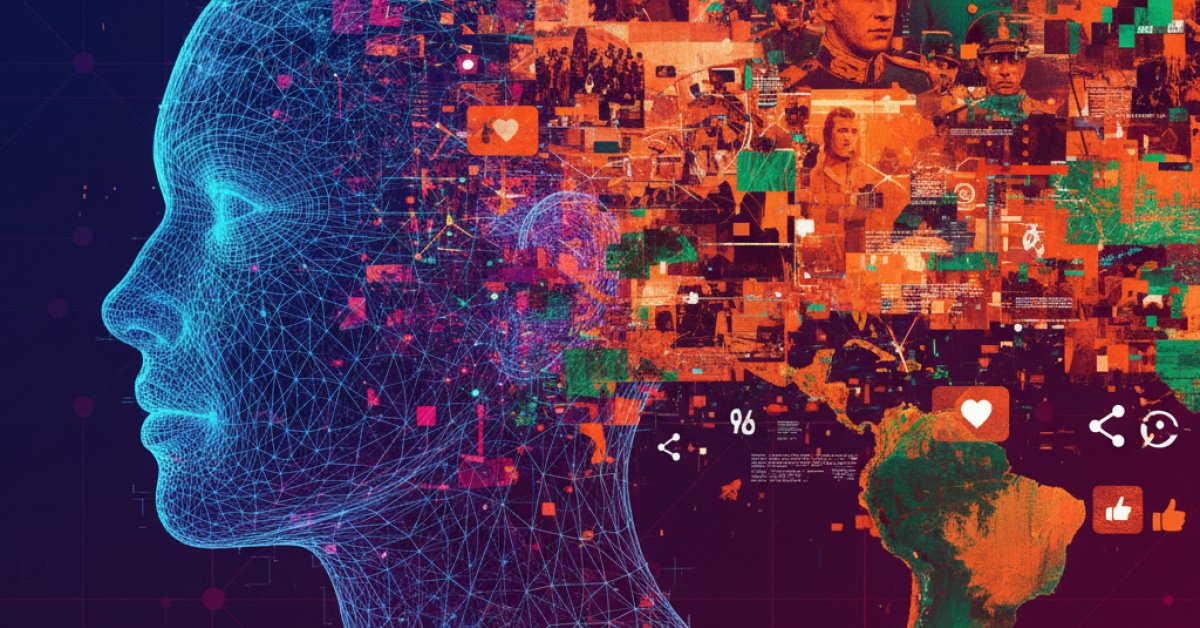
Have you noticed it, too? That feeling that the ground is shifting beneath our feet? It seems like every day, some new, wild idea pops up, and suddenly, it’s not just on a shadowy corner of the internet—it’s being talked about on the news. Honestly, it feels like everything is a conspiracy theory now.
You're not imagining it. We're living through a perfect storm. Fringe ideas are making their way into the White House and becoming actual policy. Our trust in institutions is at an all-time low, worn down by years of suspicion and the lingering weirdness of covid isolation. On top of that, social media echo chambers are more powerful than ever, and generative AI is starting to blur the lines of what’s real and what’s not.
It’s a strange mix of cutting-edge tech and old-school politics that has supercharged these ideas. But here's the wild part: many of these "new" conspiracies are just repackaged fantasies that have been around for centuries. To help us all make sense of this, the folks at MIT Technology Review just launched a fantastic new series called "The New Conspiracy Age," and it's a must-read for anyone trying to navigate this new reality. Dorian Lynskey’s first piece on why it's never been easier to be a conspiracy theorist is a real eye-opener.
So, What's on Bill Gates' Mind?
Switching gears from one massive topic to another, let's talk about the climate. Bill Gates has been deep in the climate tech world for a while now, and he’s not exactly shy about it.
At a media event last week, he pretty much laid it all out there, asking journalists, “Well, who’s the biggest funder of climate innovation companies? If there’s someone else, I’ve never met them.”
You have to admire the confidence. Since founding Breakthrough Energy in 2015, the former Microsoft CEO has poured a staggering amount of money into climate technology. With the big UN climate meetings just around the corner, Gates published a memo detailing what he believes we should all be focusing on. It’s a fascinating look into how one of the biggest players in the game is thinking about the state of climate tech right now.
Your Quick-Hit Tech News Roundup
Okay, a lot more has been happening across the tech world. Let me give you the rundown on the stories that caught my eye.
Trust is Taking a Beating
It’s not just conspiracy theories eroding trust. The US Homeland Security department was caught sharing videos they claimed showed recent immigration operations. The problem? The footage was either old or filmed thousands of miles away. It’s a tough look. And on a related note, a report from 404 Media revealed that ICE is using facial scanning on pedestrians to check their citizenship status.
AI Companionship Hits a Snag
Remember Character.AI, the platform with all those virtual companions? Well, they're now banning anyone under 18 from using it. This comes as they face lawsuits from families who say the chatbots have been harmful to their kids. The company says it's adding "age assurance functionality," but it's a stark reminder of the wild west we're in with AI relationships, especially when teenagers are involved.
Politics, Power, and Tech
In some pretty jarring news, it turns out Trump had directed the Pentagon to get ready to resume nuclear weapons testing, something the U.S. hasn't done in over 30 years. What's even stranger is that reports suggest he made a bunch of incorrect statements and doesn't seem to have a clear reason for why he even wants to do it.
Some Genuinely Good News for AI
On a much more positive note, a Google DeepMind AI model just did something incredible: it accurately predicted the severity of Hurricane Melissa. This was the first time the US National Hurricane Center officially deployed it, and it worked. It’s a powerful example of how AI can be used for good, especially when it comes to weather forecasting, where DeepMind is making huge strides.
The AI Music Scene is Getting Complicated
Universal Music Group, one of the giants of the music industry, just signed a deal with an AI music company called Udio. This is... surprising, to say the least, because UMG was previously suing Udio for copyright infringement. It just goes to show you how quickly things are changing as AI sinks its teeth into the creative industries.
Is AI Just an Excuse for Layoffs?
You’ve seen the headlines about companies laying off workers and "pivoting to AI." It's starting to feel a bit like AI is being used as a convenient excuse to cut staff. NBC News has a great piece on this, and it’s worth a read. Meanwhile, Big Tech isn’t slowing down; they're planning to keep spending billions on AI no matter what.
And Now for the Weird and Worrying...
This one is just… yikes. Users of the Meta Ray-Ban smart glasses have been caught filming inside massage parlors, harassing workers who don't seem to know they're being recorded. It’s a privacy nightmare and highlights the dark side of wearable tech.
And in other news:
- Space is a three-horse race: Did you know just three countries dominate all the world's space launches? A piece in Rest of World asks what it would take to get more nations in on the action.
- Don't hire an AI freelancer just yet: Wired tested out AI agents for freelancing gigs, and their capabilities are, shall we say, limited.
- AI-powered dogs: An app called DogPack has found a viral hit with its AI-generated videos of podcasting dogs. They're making it clear they're not trying to fool anyone, which is a nice change of pace.
A Quote That Perfectly Sums Up the Metaverse
Greg Linden, a former data scientist at Microsoft, posted this gem on Bluesky about Meta's struggling Reality Labs division:
“Zuck spent five years and $70 billion dollars to build a business that loses $4.4 billion/year to create only $470 million in revenue. So bad you can’t give it away, I guess.”
Ouch. But also, he’s not wrong. Those numbers are absolutely staggering.
But What If We Could Actually Turn Back the Clock?
Okay, let's end on something that sounds like pure science fiction. About 15 years ago, scientists in Japan discovered something wild. They took a regular skin cell, added just four specific proteins, and waited. After a couple of weeks, the cells did something astounding: they became young again.
They essentially reset, turning back into stem cells that you'd normally only find in an embryo. Think about that. Researchers can now take withered skin cells from a 101-year-old and, in a petri dish, rewind them to a state where they act like they've never aged.
After more than a decade of work on this "cellular reprogramming," a bunch of biotech companies are now saying they have real hints that this could be the key to actual age reversal technology. It's a mind-bending idea, moving from the lab to potentially becoming a reality.
And Finally, Let's Have Some Nice Things
The world of tech can be a lot to handle, so let's wrap up with a little bit of fun and comfort.
- The finalists for the 2025 Comedy Wildlife Awards are out, and they are pure gold.
- There's an Instagram account that posted the same video of Thomas the Tank Engine doing stunts every single day. I don't know why, but I love it.
- If you're always tired, here's some advice on how to get more of that precious deep sleep.
- And finally, ever wonder why we're still so obsessed with dragons? Here's a really interesting take.