It feels like just yesterday that we were all playing with ChatGPT for the first time, asking it to write poems about our pets or explain quantum physics like we're five. It was fun, a little magical, and it showed us just how human-like AI-generated text could be.
But you know who else was paying close attention? The bad guys.
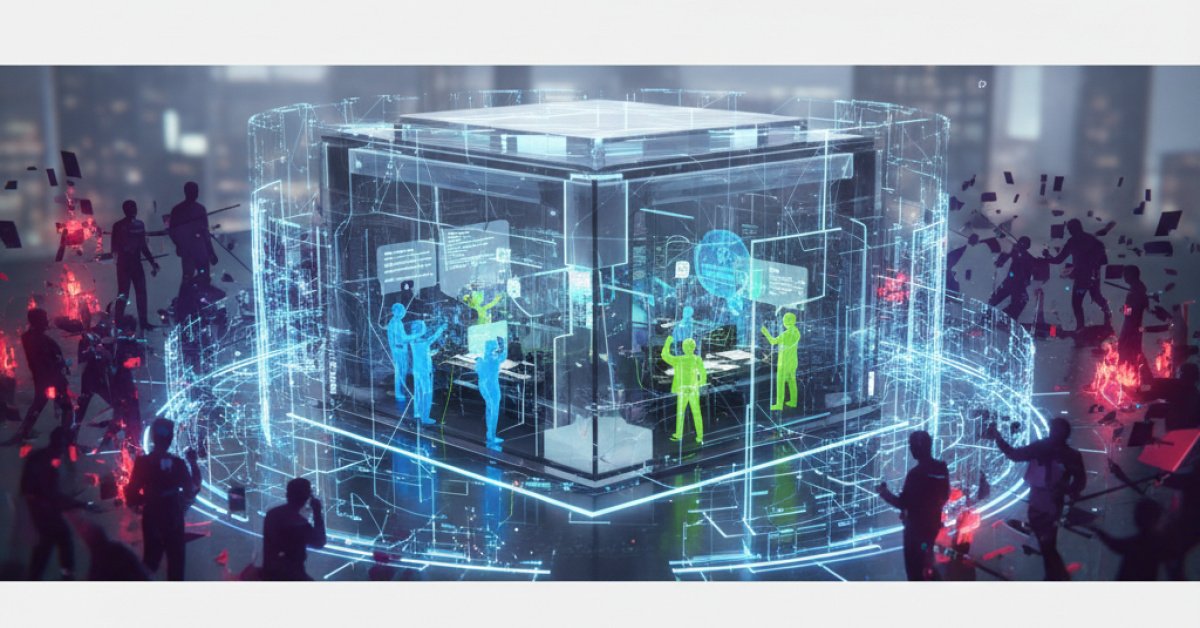
It turns out that when you create a tool that can instantly write convincing, grammatically perfect text, cybercriminals see a golden opportunity. And that’s exactly what’s happening. We’ve officially entered a new era of AI-driven scams, and honestly, it’s getting a little scary. At the same time, this exact same technology is being deployed in our hospitals with the promise of saving lives. It’s a classic tech story: incredible potential for both good and bad, happening all at once.
Let’s unpack what’s really going on.
First, the Bad News: Scams Are Getting a Supercharged Upgrade
Remember those clumsy phishing emails filled with typos that were easy to spot? They’re becoming a thing of the past. Cybercriminals are now using Large Language Models (LLMs) – the same tech behind ChatGPT – to craft perfectly written, highly persuasive malicious emails.
Think of it like this: before, scammers were like amateur burglars, jiggling locks and hoping for the best. Now, AI has handed them a master key.
They’ve gone way beyond just emails. We're seeing AI used for everything from:
- Turbocharged Phishing: Creating thousands of unique, personalized scam messages in minutes.
- Hyperrealistic Deepfakes: Using AI to create fake audio or video of a loved one in distress to trick you into sending money.
- Automated Hacking: Programming AI to constantly scan for vulnerabilities in corporate networks.
The real problem here is the sheer volume. AI makes these attacks faster, cheaper, and ridiculously easy to scale. For a lot of organizations, it's like trying to drink from a firehose. The attacks just don't stop, and they're getting more sophisticated by the day. This isn't a future problem; it's happening right now, and it’s only going to get more intense as the tools improve.
Now, the Hopeful Part: Can AI Actually Make Us Healthier?
Okay, let's pivot from the dark side for a minute. While some people are using AI to cause chaos, others are trying to use it to save lives. AI is quietly making its way into our doctor's offices and hospitals, and it’s doing some pretty interesting things.
Doctors are using it to help with the mountain of paperwork, automatically taking notes during your visit so they can focus on you, not a screen. AI tools are also digging through millions of patient records to flag people who might be at high risk for a certain disease, helping doctors intervene earlier. They're even being used to interpret X-rays and other medical scans, sometimes spotting things the human eye might miss.
So far, so good, right? A growing number of studies suggest that many of these tools are surprisingly accurate. But here’s the million-dollar question that no one seems to have a good answer for yet:
Does using AI actually lead to better health for patients?
It's a huge blind spot. We can prove an AI is good at reading an X-ray, but we can't yet prove that a hospital using that AI has better patient survival rates. It’s like having a student who aces every practice test but we don’t know if they’ll actually pass the final exam.
We just don't have the data yet. Answering this question requires long-term, complicated studies, and the tech is moving so fast that the research can barely keep up. So for now, healthcare AI is a world of incredible promise, but it’s a promise that’s still waiting to be proven in the real world.
A Quick Spin Through the Rest of the Tech World
While we’re grappling with these huge topics, the tech world keeps spinning. Here are a few other fascinating (and sometimes worrying) things that have been happening.
- A New AI Contender Emerges: A Chinese company called DeepSeek just dropped its new AI model, DeepSeek-V4. They claim it’s the most powerful open-source platform out there, even rivaling the big closed-source models from OpenAI and Google’s DeepMind. The AI race is truly a global one now.
- The US vs. China AI Feud Heats Up: Speaking of which, tensions are rising. The White House put out a memo accusing Chinese firms of essentially stealing American AI models to build their own. As you can imagine, Beijing wasn't thrilled and called the claims "slander."
- OpenAI Goes Wide: In a move that set it apart from its rival Anthropic, OpenAI has released its powerful new model to all ChatGPT users, not just paying ones. They say it's way better at coding and more efficient, but some cybersecurity folks are a little nervous about putting such a powerful tool in everyone's hands for free.
- The Price of AI: Meta is reportedly cutting about 10% of its workforce to help offset the massive cost of its AI development. It's a stark reminder that building this technology is incredibly expensive, and we're seeing growing anti-AI protests from people worried about its impact.
- The Free-for-All is Ending: Remember how we could all play with the most advanced AI models for free? Yeah, those days seem to be numbered. The AI labs are under huge pressure to actually start making money, which means we'll likely see more paywalls and subscription models.
- Kids and Social Media: More countries are finally starting to put their foot down. Norway is the latest to enforce an age-restriction ban on social media for kids. The country’s Prime Minister, Jonas Gahr Store, put it perfectly: "We want a childhood where children get to be children. Play, friendships, and everyday life must not be taken over by algorithms and screens."
- The Musk vs. Altman Drama: The legal battle between Elon Musk and OpenAI’s Sam Altman is heading to court, and it's already spilling some pretty juicy secrets about the early days of the world's most famous AI company.
- Ditching the Smartphone: A new movement called "Month Offline" is gaining steam. It's basically a "Dry January" but for your phone, encouraging people to disconnect for a month to see how it changes their lives.
To End on a Note of Wonder: Looking for Life on an Icy Moon
With all the talk of corporate battles and supercharged scams, it’s easy to get a little cynical about technology. So let's end with something truly amazing.
For decades, scientists have been captivated by Europa, Jupiter’s fourth-largest moon. It’s an icy world, but beneath that frozen crust, there's a vast, saltwater ocean. All that water, combined with energy from Jupiter's gravitational pull and hints of the chemical building blocks of life, points to an incredible possibility. Deep in that dark, alien ocean, there could be life.
To find out, NASA is on a mission to search for signs of it. It’s a beautiful reminder that for all its earthly problems, technology is also what allows us to ask the biggest questions and explore the most incredible frontiers imaginable. It’s all just a matter of what we choose to do with it.