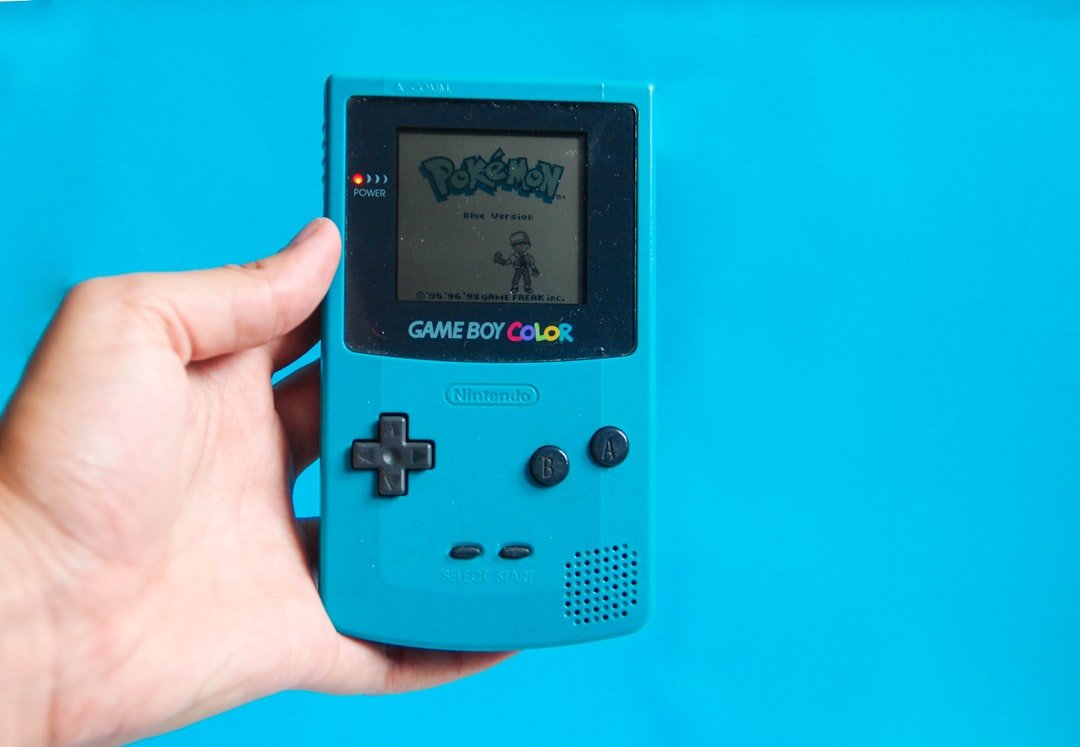
Remember the summer of 2016? It felt like the entire world stopped what it was doing and went outside. You’d see crowds of people, heads down, phones out, swiping furiously at their screens. We were all on the same mission: to catch a Squirtle by the fountain or find a Jigglypuff hanging out near the library.
Pokémon Go was a phenomenon. It was this magical, slightly nerdy thing that brought augmented reality to the mainstream. In just 60 days, a staggering 500 million people downloaded the app. And even now, years later, it’s still pulling in over 100 million players.
But here’s the wild part, the thing none of us realized while we were trying to catch ‘em all. Every time we pointed our phone at a statue, a park bench, or a weird-looking building to catch a Pokémon, we were doing more than just playing a game. We were all, collectively, building one of the most detailed visual maps of the world ever created.
And now, that map is being used to help robots deliver pizza. Seriously.
We’ve All Been Fooled by That Little Blue Dot
Let's be honest, you know exactly what I'm talking about. You’re in a big city, trying to find a coffee shop. You pull out your phone, and the little blue dot that’s supposed to be you is jumping around like it’s had way too much caffeine. One second it’s on your side of the street, the next it’s across the road, and then it’s floating in the middle of a building.
This is what tech folks call the "urban canyon" problem. In cities with tall buildings, GPS signals bounce around like a pinball, creating all sorts of interference. For us, it’s a minor annoyance. For a delivery robot, a 50-meter error is the difference between showing up at your door and ending up in the next neighborhood.
This is the exact headache that a company like Coco Robotics faces every single day. They have around 1,000 little delivery robots, about the size of a suitcase, zipping along sidewalks in cities like L.A., Chicago, and Miami. As their CEO, Zach Rash, puts it, their whole job is to "arrive exactly when we told you we were going to arrive." And you can't do that if your robots are constantly getting lost.
From Catching Pokémon to Pinpointing Location
This is where the story comes full circle. Remember Niantic, the company behind Pokémon Go? Well, they spun out a new AI company called Niantic Spatial. And their CTO, Brian McClendon, realized they were sitting on a goldmine.
They took that massive trove of data—we’re talking 30 billion images—captured by millions of Pokémon Go and Ingress (their earlier AR game) players. These weren't just random pictures; they were all tagged with super-precise location data.
Think about it. For popular in-game locations, like a Pokémon gym at a city landmark, they had thousands upon thousands of images. Pictures of the same spot from every conceivable angle, at different times of day, in the sun, in the rain, in the snow. Each photo came with a bunch of metadata saying exactly where the phone was, which way it was pointing, how fast it was moving, and more.
Using this incredible dataset, they built what’s called a Visual Positioning System (VPS). It’s a fancy way of saying they trained an AI model to know a location just by looking at it.
John Hanke, the CEO of Niantic Spatial, explained it perfectly: "It turns out that getting Pikachu to realistically run around and getting Coco’s robot to safely and accurately move through the world is actually the same problem."
So now, when one of Coco’s robots is trundling down a sidewalk in Jersey City, its four cameras are constantly scanning its surroundings. It sends a few snapshots to Niantic’s model, and the AI can say, “Ah, I see that fire hydrant, that storefront, and that specific crack in the pavement. I know exactly where you are, down to a few centimeters.”
It’s like giving the robot a photographic memory of every street corner it will ever encounter.
This Was Never Just About Gaming
Here’s what’s so fascinating to me. When Niantic first started building this tech, they weren't thinking about pizza delivery. They were thinking about the next big thing: AR glasses. The idea was that if you’re wearing AR glasses, the digital objects you see need to feel like they’re locked into the real world. The system needs to know precisely where you are and what you're looking at.
But as Hanke says, "robots became the audience." We're suddenly seeing a "Cambrian explosion in robotics," with autonomous machines starting to share our spaces, from sidewalks to construction sites. And for that to work safely, those robots need a human-like understanding of their environment.
This partnership with Coco Robotics is just the beginning. Niantic’s big vision is to create what they call a "living map." As Coco’s robots (and eventually, robots from other companies) move through the world, they’ll constantly be sending back new visual data, keeping the map updated in near real-time. It’s a map that evolves as the world evolves.
A New Kind of Map, for a New Kind of User
For centuries, maps were for us. They helped us understand our place in the world. But now, we’re entering an era where the primary user of a map might not be human.
And maps for machines need to be different. A machine doesn't just need to know the location of a lamppost; it needs to know that it is a lamppost. It needs a description, a set of properties. Hanke describes it as building a "guidebook" for machines, filled with the kind of common-sense information we take for granted.
This all ties into the hot new buzzword in AI: "world models." While some companies are building AI that can generate fantasy worlds for training, Niantic is taking the opposite approach. As McClendon says, "I’m very focused on trying to re-create the real world."
It’s a powerful reminder that sometimes the most groundbreaking technology doesn't come from a sterile lab. It comes from something unexpected, something fun. It turns out that millions of us, just trying to have a good time and catch a rare Pokémon, were accidentally helping to build the future of how machines see and navigate our world. And frankly, if it means my pizza shows up exactly on time, I’d say that’s a pretty good outcome.