For decades, the dream for manufacturing has been automation. We pictured these "lights-out" factories, humming along perfectly with robots doing all the work. And to be fair, that approach got us pretty far. It made things more efficient and cut costs in ways that were hard to imagine before.
But let's be honest, that's not the full picture anymore.
Today, if you're running a factory, you’re facing a totally different set of problems. You're trying to grow, but you can't find enough skilled people. Your supply chains are more complex than ever. And you’re under constant pressure to innovate faster without messing up quality or safety. The old playbook of just automating repetitive tasks isn't enough to solve these new, messy challenges.
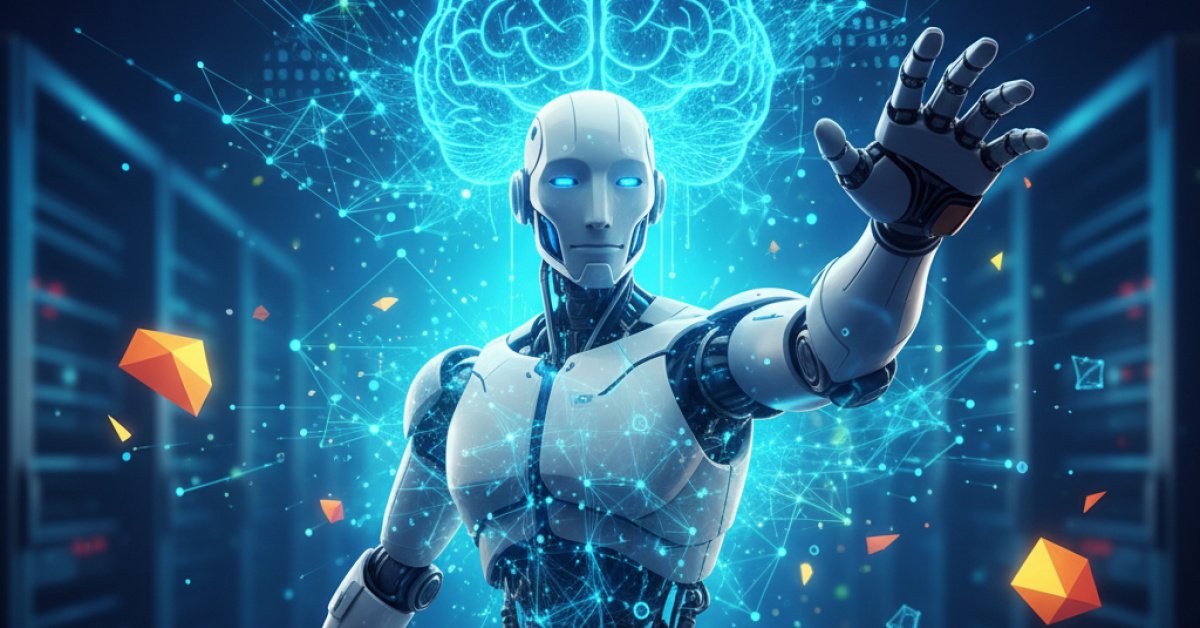
This is where things get really interesting. The next big leap isn't about another isolated AI tool or a slightly faster robot. It’s about building intelligence that can actually operate in the physical world. We're talking about "physical AI"—AI that can sense what's happening around it, make a decision, and then do something about it. This is a massive shift, and it’s why giants like Microsoft and NVIDIA are teaming up to help make it a reality on a huge scale.
So, What's Changed? It's About More Than Just Automation
Most of the early AI we saw in manufacturing was focused on optimization. Think AI that could predict when a machine needed maintenance or a program that could find a slightly faster way to run a production line. It was valuable, for sure, but it was also narrow.
Often, these tools created new headaches. They left skills gaps, raised questions about who was in charge, and left people feeling uncertain about the future. The focus was always on what work the machines could take from people.
The new approach, what you might call the "industrial frontier," flips that question on its head. Instead of asking what machines can replace, leaders are now asking: How can AI make our people even better at their jobs? How can it help us innovate faster and create new value, all while being completely trustworthy and under our control?
Two words keep coming up in every conversation I have about this:
- Intelligence: The AI can't be generic. It has to deeply understand how your business actually works—your data, your workflows, and all that institutional knowledge that’s usually just stuck in people's heads.
- Trust: When AI starts making decisions that affect the physical world, you absolutely have to know it's secure and that you can see what it's doing. You need control.
Without real intelligence, AI is just a dumb tool. And without trust, nobody is ever going to actually use it for anything important.
The Factory Floor: The Perfect Test for Real-World AI
Manufacturing is right at the heart of this entire shift. For the first time, AI isn't just stuck in a server room analyzing data or helping with planning. It's moving onto the factory floor. It's coordinating machines, dealing with the messy, unpredictable nature of the real world, and working right alongside human teams.
Think about it. Robots, autonomous forklifts, and AI agents now have to see, reason, and act in environments that are constantly changing.
This immediately shows you the gap we've had for years. Traditional automation is fantastic at doing the exact same thing a million times. But throw it a curveball—a part that’s slightly out of place, a change in materials—and it grinds to a halt. On the other hand, human workers are brilliant at adapting and using their judgment, but we can't scale infinitely.
Physical AI is the bridge between those two worlds. It creates systems where humans lead and AI operates. You, the person, set the goal or the intent. The intelligent system then figures out the best way to execute it, learning and getting better over time. In this model, people are more important than ever.
Microsoft and NVIDIA: Teaming Up to Build the Future
You can't just buy "physical AI" in a box. It’s not a single product. It requires a whole chain of tools that connect simulation, data, AI models, and robotics into one seamless system.
This is where the collaboration between Microsoft and NVIDIA gets so powerful.
NVIDIA is building the fundamental engine for it all. They're creating the super-fast computing, the AI models, the simulation libraries, and the robotics frameworks that allow these autonomous systems to perceive, plan, and act. They’re essentially providing the brain and nervous system for the next generation of smart machines.
Microsoft comes in with the cloud and data platform that allows you to run all of this securely and at a massive scale. They provide the enterprise-grade environment to manage the data, deploy the AI, and ensure everything stays secure and governed.
Together, they're giving manufacturers a path to move beyond small experiments and start building production-ready physical AI. You can develop and test an idea in a virtual simulation, deploy it to the real world, and continuously improve it across your entire operation, from the factory to the supply chain.
What This Actually Looks Like: Your New Digital Teammate
On this new industrial frontier, AI isn't some black box running in the background. It's more like a digital teammate. When you connect these AI agents to the right operational data and build them into your team's existing workflows, they can start helping with some seriously complex tasks.
Imagine an AI that can:
- Tweak a production line in real-time to account for a change in raw materials.
- Coordinate maintenance schedules with quality control checks automatically.
- Instantly adapt factory operations when a supply chain disruption happens.
- Help engineers test new product designs virtually to find flaws faster.
For example, companies are starting to use AI agents in simulations to test changes to the factory layout. Before they spend a dime or move a single machine, they can see how the change would impact production, identify bottlenecks, and reduce the risk of making a costly mistake.
But here’s the most important part: these systems are designed so that a human is always in the loop. The AI recommends, monitors, and executes. The person provides the goal, the oversight, and the final judgment call. It’s a balance that lets you move faster without ever feeling like you've lost control.
Why Trust is the Real Bottleneck to Making This Work
As these physical AI systems get more powerful and more common, trust becomes the single biggest thing holding back progress. It's one thing to have an AI suggest a marketing email; it's another thing entirely to have it controlling heavy machinery.
Manufacturers have to be 100% certain that these systems are secure, that they can be monitored, and that they are operating within the safety rules you've set. You can't just bolt on governance and security at the end. It has to be baked in from the very beginning.
This is why the companies leading the way treat trust as a non-negotiable. They know that you can only get wide-scale adoption if the people on the ground—from the factory floor to the boardroom—are confident in the system. Only then can physical AI move from a cool demo to something that truly transforms the entire business.
This Isn't Sci-Fi Anymore—It's Happening Now
We're at a really pivotal moment. The convergence of AI agents, robotics, simulation, and real-time data is changing what's possible in manufacturing. Things that felt like science fiction just a few years ago are becoming operational realities.
At the upcoming NVIDIA GTC 2026 conference, Microsoft and NVIDIA are set to show exactly how their work supports these kinds of physical AI systems—systems that manufacturers can start deploying today and scale up responsibly.
For anyone in this industry, the question is no longer if physical AI will reshape how we make things. The real question is how quickly you can start embracing it responsibly, at scale, and with trust built in from day one. The journey is just getting started, and it’s going to be fascinating to watch.