When you think of San Francisco, what comes to mind? For most of us, it’s probably gleaming tech campuses, self-driving cars, and the buzz of innovation. It's the global epicenter of all things AI and cutting-edge.
But there's another side to the city. In the heart of it all lies the Tenderloin, a neighborhood facing some of the city's most profound challenges. And right there, on the front lines, are nonprofits working tirelessly to support the community, often relying on the kindness of volunteers.
Here’s the thing, though: those volunteers have become harder and harder to find. One nonprofit, struggling to keep up with the demand for meals, found itself in a real bind. So they turned to a solution that feels straight out of the city's tech-centric identity. They brought in robots.
What Happens When the Volunteers Don't Show Up?
Let's be real for a second. Running a nonprofit is tough work on the best of days. Now imagine you’re trying to feed hundreds, if not thousands, of people every week, and your team of volunteers is shrinking.
This isn't just a hypothetical problem. Many organizations are feeling the pinch. People are busy, burned out, and the pool of folks with the time and energy to consistently show up for volunteer shifts has been dwindling.
For this particular nonprofit in the Tenderloin, it was becoming a crisis. The need for their services wasn't going down—in fact, it was growing. But the number of helping hands was. They were at a crossroads: either scale back their services or find a completely new way to get the job done.
Meet the Newest Members of the Kitchen Staff
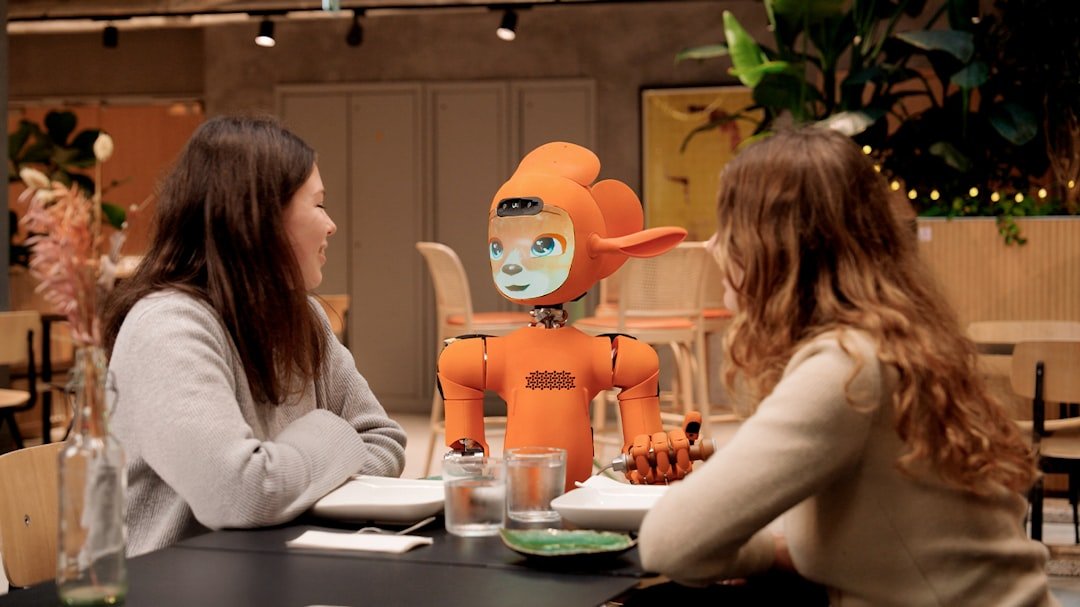
So, what does a "robot chef" in a nonprofit kitchen actually look like? Forget the image of a C-3PO-style robot in a chef's hat, meticulously sautéing vegetables. The reality is a bit more practical, but honestly, just as impressive.
Think of it more like a hyper-efficient, specialized assembly line. These aren't general-purpose robots; they're custom-built machines designed for one thing: preparing meal bowls with incredible speed and precision.
The system is surprisingly straightforward. Here’s a rough idea of how it works:
- The Setup: A line of containers moves along a conveyor belt.
- The Dispensers: Above the belt, different machines hold various ingredients—rice, beans, cooked vegetables, protein.
- The Action: As a bowl passes under a dispenser, a robotic arm or a precise spout drops the exact, pre-programmed portion of that ingredient into the bowl.
- The Finish Line: By the time the bowl reaches the end of the line, it’s a complete, perfectly portioned meal, ready to be sealed and handed out.
It’s simple, elegant, and incredibly effective. The remaining human volunteers can then focus on the more complex tasks—prepping the raw ingredients, managing the machines, and, most importantly, interacting with the people they're serving.
More Than Just Filling Bowls
Okay, so the robots are fast. But what does this actually mean for the nonprofit and the people who depend on it?
First, there’s the sheer scale. A small team of people overseeing these machines can prepare hundreds of meals in an hour, a task that would have previously required a whole crew of volunteers working for half a day. This means more people get a hot, reliable meal, every single time.
Second, it’s about consistency and safety. Every meal has the same portion sizes, ensuring fairness and good nutrition. And because the process is mostly automated, it reduces the chances of human error or contamination, which is a huge deal when you're serving a vulnerable population.
But I think the biggest impact is on the human element. When you free people from the repetitive, back-breaking work of scooping rice and beans for hours on end, you give them a chance to do what humans do best: connect.
The volunteers who are still there can now spend more time talking with guests, listening to their stories, and offering a warm smile. They can focus on the human side of the service, which is often just as nourishing as the food itself. The robots aren't replacing the human touch; they're enabling it.
So, Is This the Future of Charity?
It’s easy to feel a little weird about this at first. Robots feeding the homeless? It sounds a bit dystopian, right? But the more I think about it, the more I see it as a genuinely hopeful story.
This isn't about technology replacing our compassion. It's about using our ingenuity to solve a very real, very human problem. When a community is in need and the old ways of helping are no longer enough, we have to be creative.
This San Francisco nonprofit didn't give up when volunteers became scarce. They found a new tool to help them fulfill their mission. It’s a powerful reminder that technology, at its best, isn't just about creating the next shiny gadget. It can be a lifeline, a way to amplify our ability to care for one another, especially when it matters most.