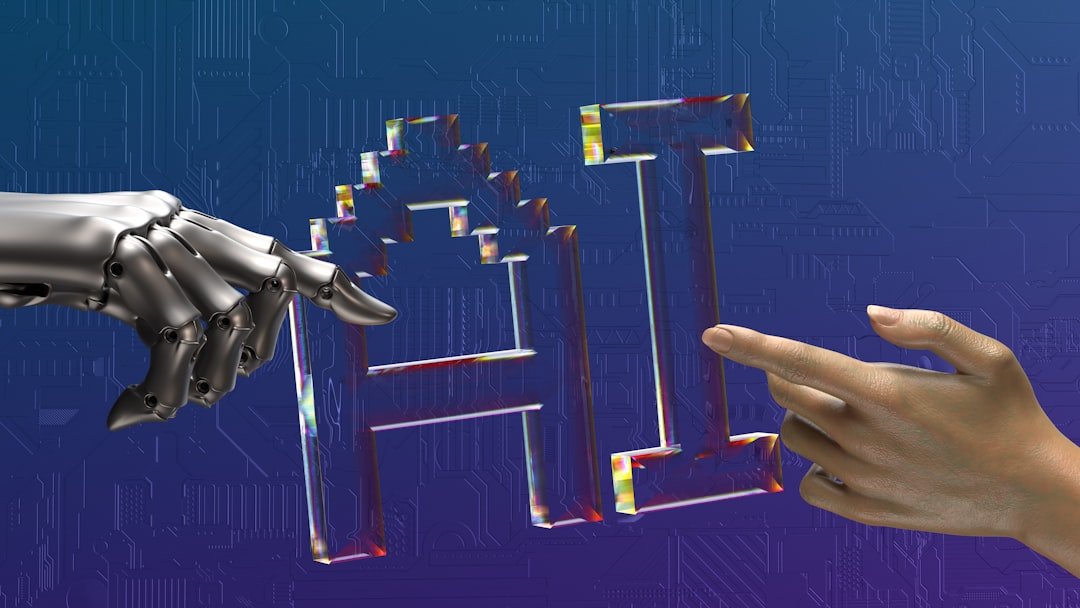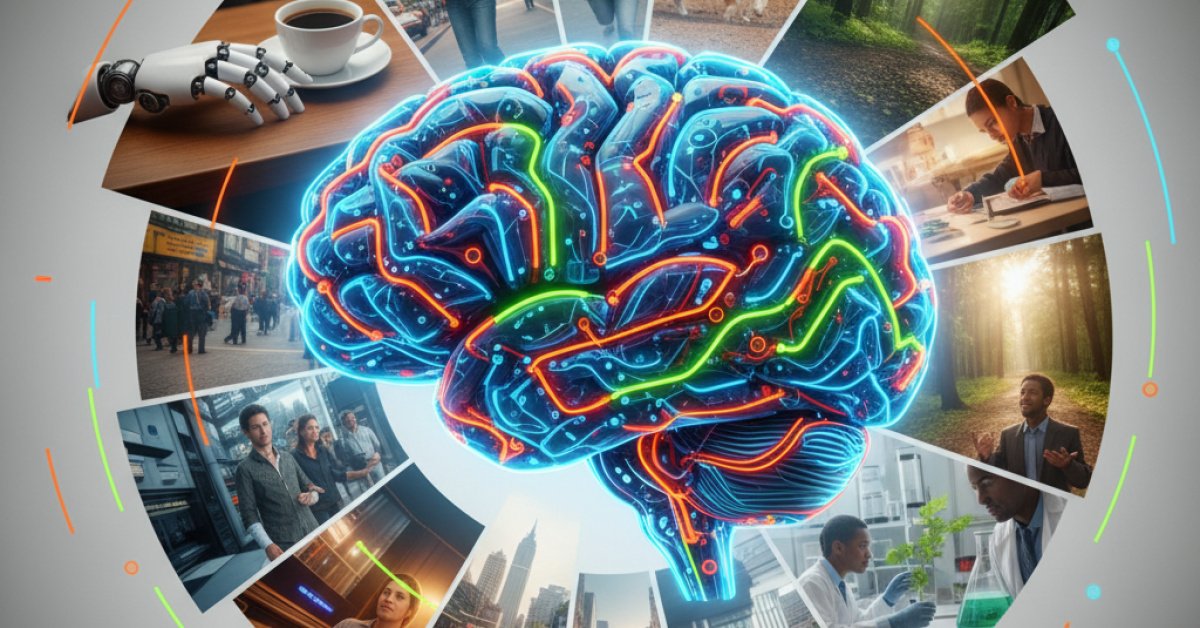
Have you ever gotten one of those bizarrely specific online offers? The other day, I saw an app that wanted to pay me to film myself doing the most boring things imaginable—scooping cereal into a bowl, putting a dish in the microwave, you get the idea. Another site was looking for people to remotely control a robotic arm, just to wiggle it around a bit.
My first thought was, "What on earth is happening?" It feels a little like a sci-fi movie, doesn't it?
Well, it turns out this isn't just random weirdness. It's part of a massive, and I mean massive, push by robotics companies to gather data. Our simple, everyday movements are becoming the new gold. They're literally turning your lunch prep into a lesson plan for a humanoid robot.
As this race for real-world data heats up, it’s a powerful reminder of how AI is seeping into every corner of our lives. And speaking of digging for data to understand our world, a very different, and much colder, kind of data hunt is happening at the very top of our planet.
So, Why Do Robots Need to Watch You Make a Sandwich?
Think about it this way. You’ve spent your entire life learning how to interact with the world. You know how to pick up an egg without crushing it, how a door handle works, and that you probably shouldn’t put a metal fork in a microwave. A robot knows none of this.
For years, we’ve trained AI in sterile, digital environments. But for a robot to walk around your house and be genuinely useful, it needs to understand the messy, unpredictable, and frankly, kind of clumsy reality of being human.
So, when a company offers you a few bucks to film yourself doing chores, they’re not just being nosy. They're building a library of "how to be human" for their machines. They're teaching them dexterity, common sense, and the unwritten rules of physical space. It’s a fascinating, and slightly unsettling, glimpse into the future of robotics. This whole idea is easily one of the biggest trends in AI right now, and it’s happening right under our noses.
Meanwhile, Scientists Are Digging for Earth's "Training Data"
Now, let's pivot from robot kitchens to the North Pole, where another critical data-gathering mission is underway. Getting to the North Pole used to be an epic, treacherous journey through meters of thick, unforgiving ice. But last year, a research ship found something shocking: open water and thin ice, making the passage almost easy.
It was a stark reminder of just how fast the Arctic is changing.
This has created a unique, if sobering, opportunity. Scientists are now drilling deep into the seabed beneath the Arctic Ocean. Their goal? To find out if the Arctic was ever completely ice-free in the past. By analyzing ancient sediment, they’re essentially reading Earth’s diary, looking for clues about our planet’s climate history.
Why does this matter? Because understanding what happened then could help us predict what’s coming next for our planet. It’s another form of collecting training data, but instead of teaching a robot to open a jar, this data could help us understand the future of our entire world.
Your Weekly AI Whirlwind: What You Actually Need to Know
Beyond robots and ice cores, the world of AI has been buzzing. It can feel like trying to drink from a firehose, so let’s just hit the highlights—the stuff that really matters.
1. The AI Spending Spree is Out of Control The tech giants are throwing money at AI like it’s going out of style. Google, Microsoft, Amazon, and Meta have collectively cranked up their AI spending by a staggering 71% compared to this time last year. For some, like Microsoft and Google, it’s paying off with big returns. But for Meta, the massive spending plans actually spooked investors and sent their stock sliding. It’s a high-stakes game of who can build the biggest and best AI, and the price tag is astronomical.
2. The White House Gets Nervous Even the government is getting edgy. The White House is reportedly pushing back on AI company Anthropic’s plans to expand access to its latest model, Mythos. The main fear? The model could be used for cyberattacks, and officials are worried about the security risks. It’s a classic battle between innovation and caution, and it shows that the people in charge are starting to take the potential dangers of AI very seriously.
3. The Drama Between Elon Musk and OpenAI Continues You can’t talk about AI without a little drama. In recent testimony, Elon Musk claimed he was a "fool" for trusting the leaders of OpenAI, accusing them of "looting the nonprofit" he helped start. This legal battle isn't just about personalities; it could fundamentally reshape how AI companies are structured and held accountable.
4. Are Self-Driving Cars Hitting a Pothole? We’ve been promised a future of autonomous vehicles for years, but it might be getting further away, not closer. A new report suggests that, according to emergency first-responders, glitches and unpredictable behavior from self-driving cars are actually increasing. It’s a sobering reality check on a technology that’s proven to be much harder to perfect than anyone thought.
5. OpenAI Pumps the Brakes on Its Supercomputer Remember "Stargate," OpenAI's rumored $100 billion supercomputer project with Microsoft? Well, it seems they’re scaling back those ambitions significantly. The latest news is that OpenAI will no longer develop its own data centers for the project. It’s a sign that even the top players are questioning the sheer cost and energy required to push AI to the next level.
6. A Controversial Scientist's New Chapter in China This one is straight out of a thriller. A brilliant Harvard scientist, once named the world's top chemist, was convicted in the U.S. for lying about payments he received from China. Now, he's resurfaced...in China, rebuilding a brain-computer interface lab. This story sits right at the intersection of scientific ethics, global competition, and national security.
7. A Sobering Lawsuit Over ChatGPT In a tragic and groundbreaking case, families are suing OpenAI. They claim that the company provided a "dangerously defective" version of its chatbot to a mass shooter, who used it to help plan his attack. This lawsuit could set a major precedent for the responsibilities AI companies have for how their tools are used.
8. Is Apple’s Vision Pro a Flop? It was hyped as the next big thing, but Apple is reportedly close to giving up on its futuristic Vision Pro headset after the first model failed to catch on. It’s a tough pill to swallow for Apple, and a reminder that even the biggest company in the world can’t force a new technology on consumers if they aren’t ready for it.
9. The U.S. vs. China AI Race Heats Up U.S. Senators are grilling American AI firms about the safeguards they have in place to prevent their technology from being stolen by or benefiting China. The fear of intellectual property theft is huge, and it’s turning the development of AI into a key front in the geopolitical rivalry between the two countries.
10. A Weird Quirk: Friendlier AI Might Be Dumber AI Here’s a strange one to end on. A new study found that when AI chatbots are designed to be kinder and more conversational, they’re also more likely to make mistakes. It seems that adding a "friendly" personality layer can sometimes interfere with the model’s accuracy. So, if you want the right answer, you might be better off with a chatbot that’s a bit more blunt.
And Finally, a Rule for the Robots
Just to prove how detailed this all gets, someone uncovered a system prompt for OpenAI's coding assistant, Codex. It includes this gem of an instruction:
“Never talk about goblins, gremlins, raccoons, trolls, ogres, pigeons, or other animals or creatures unless it is absolutely and unambiguously relevant to the user’s query.”
You have to wonder what happened to make them write that rule.
It’s a wild time in technology. We're teaching robots how to be human while digging up our planet's past to save our future. It’s a lot to take in, but it’s never, ever boring.