Alright, let’s grab a coffee and talk about what’s happening in tech, because some of it is truly mind-bending this week.
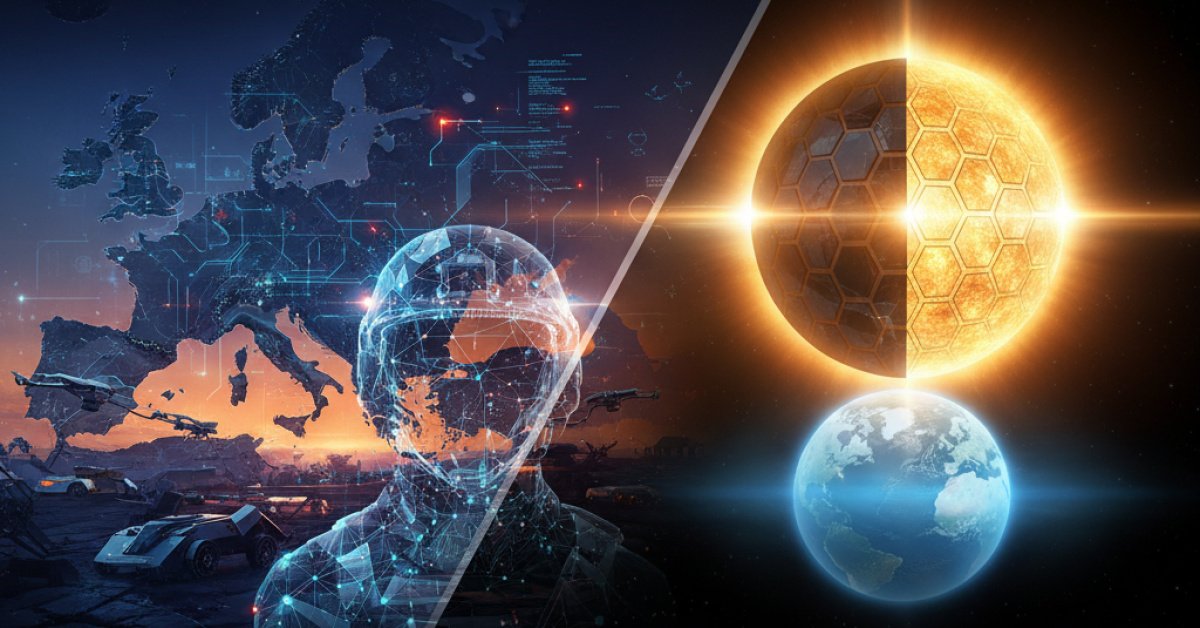
Imagine this: a private company comes to you and says, "Hey, for about a billion dollars a year, we can solve climate change." Their plan? Fly a fleet of special planes into the stratosphere and spray a bunch of particles to reflect sunlight away from Earth, basically giving the planet a pair of sunglasses.
Sounds like something straight out of a sci-fi novel, right? Well, it’s a real proposal from an Israeli startup called Stardust Solutions. They’re betting that nations will soon be desperate enough to pay them to, essentially, set the Earth’s thermostat. As you can probably guess, a whole lot of scientists are raising their eyebrows, and not just because of the potential environmental side effects. The bigger question they’re asking is… should a for-profit company really be in control of the global climate? It’s a wild thought.
So, What's Happening With Our Power Grid?
While some are looking to the sky for solutions, others are focused on the ground. Let's talk about something a little less "mad scientist" and a bit more practical: our electric grid.
It’s one of those things we all take for granted until the power goes out. But keeping it reliable, affordable, and sustainable is a massive challenge. I was listening to a great piece from MIT Technology Review about a public utility in Nebraska, of all places. They’re aiming to hit net zero by 2040, which is incredibly ambitious.
They’re not just building more wind turbines; they’re getting creative with something called "virtual power plants." Think of it like this: instead of one giant power station, you connect thousands of smaller resources—like home batteries, smart thermostats, and electric vehicles—and use them as a single, coordinated energy source. It's a clever way to manage demand and supply, and it’s a trend that’s really starting to pick up steam. It’s a glimpse into a smarter, more resilient energy future that we’re going to be hearing a lot more about.
Let's Talk About AI's Awkward Phase
Okay, you knew we had to get to AI. The hype train has been running at full speed for over a year, but it feels like we’re starting to see some cracks appear.
For starters, OpenAI, the company that kicked this whole thing off with ChatGPT, seems to be in a bit of trouble. It feels like just yesterday they were the undisputed king, but competitors like Google and Anthropic are catching up, and fast. The tech edge they had is shrinking, and it really makes you wonder if their early lead was just a head start, not a permanent advantage. Silicon Valley is still trying its best to sell us on AI being the future of everything, but even the experts at the biggest AI conferences can't seem to agree on how the heck these things actually work.
And this uncertainty is spilling out into the real world in some pretty messy ways.
- The "AI Slop" is real. Have you been scrolling through social media lately and seen those bizarre videos that just feel… off? Weird animations, strange narration, nonsensical recipes? That’s “AI slop,” and it’s flooding our feeds. It’s getting genuinely hard to tell what’s real and what’s been churned out by a machine to grab a few seconds of your attention.
- Big brands are still getting it wrong. You’d think major companies would know better by now, but McDonald’s just had to pull a holiday ad that used AI so poorly people absolutely hated it. It’s a good reminder that just because you can use AI doesn’t mean you should.
- Your next phone is getting more expensive. And yes, you can thank AI for that, too. The massive demand for powerful chips to train AI models is driving up the price of components like RAM, and that cost is going to be passed right down to us when we buy our next laptop or smartphone.
The Human Side of Technology's Reach
Of course, tech isn't just about gadgets and code; it's about how it impacts our lives, our society, and even our politics. And there’s a lot happening on that front.
Down in Australia, they just flipped the switch on a ban preventing kids under 16 from using social media. The whole world is watching to see how this plays out. Is it a smart move to protect young people, or a step too far? Opinions there are sharply divided, and you can bet teens aren't exactly thrilled.
Here in the U.S., there are some worrying stories bubbling up. A system designed to find noncitizen voters is mistakenly flagging actual U.S. citizens, giving them just 30 days to prove their citizenship or lose their right to vote. It’s a stark example of how technology, when implemented poorly, can have serious real-world consequences for people’s fundamental rights.
And in a truly strange twist, MAGA influencers are apparently trying to pressure Trump to kill a potential Netflix/Warner Bros. deal, arguing that Netflix is too "woke." It's just another day in the bizarre intersection of tech, media, and politics.
The Wild Future of… Unlimited Organs?
I want to end on a story that feels both deeply human and incredibly futuristic. Right now, about 100,000 people in the U.S. are on a waiting list for an organ transplant. Thousands die waiting.
An entrepreneur named Martine Rothblatt is working on a solution that sounds like science fiction: growing human-compatible organs inside genetically modified pigs. Her company recently supplied a pig heart that was transplanted into a man with heart failure, and he lived for two months.
Think about that. It was the first time a pig-to-human transplant sustained a life, and it’s paving the way for clinical trials that could one day make organ shortages a thing of the past. It's a complicated, ethically-fraught area of science, but the potential to save so many lives is just staggering.
It’s a powerful reminder that for all the talk of AI slop and corporate fumbles, technology still holds the potential to do profoundly good things. It’s a messy, chaotic, and sometimes scary world out there in tech, but it’s never, ever boring.