Remember the promise? Just a couple of years ago, the conversation around AI was all about work. It was going to be our tireless assistant, our brilliant co-pilot, the digital brain that would finally free us from the tyranny of spreadsheets and overflowing inboxes. We were sold a future of hyper-productivity, where AI would handle the grunt work so we could focus on the "big ideas."
We all pictured it, right? An AI that could perfectly summarize that two-hour Zoom meeting you zoned out of, draft flawless emails, and debug code while you grabbed a coffee. The dream was simple: AI would make our jobs easier.
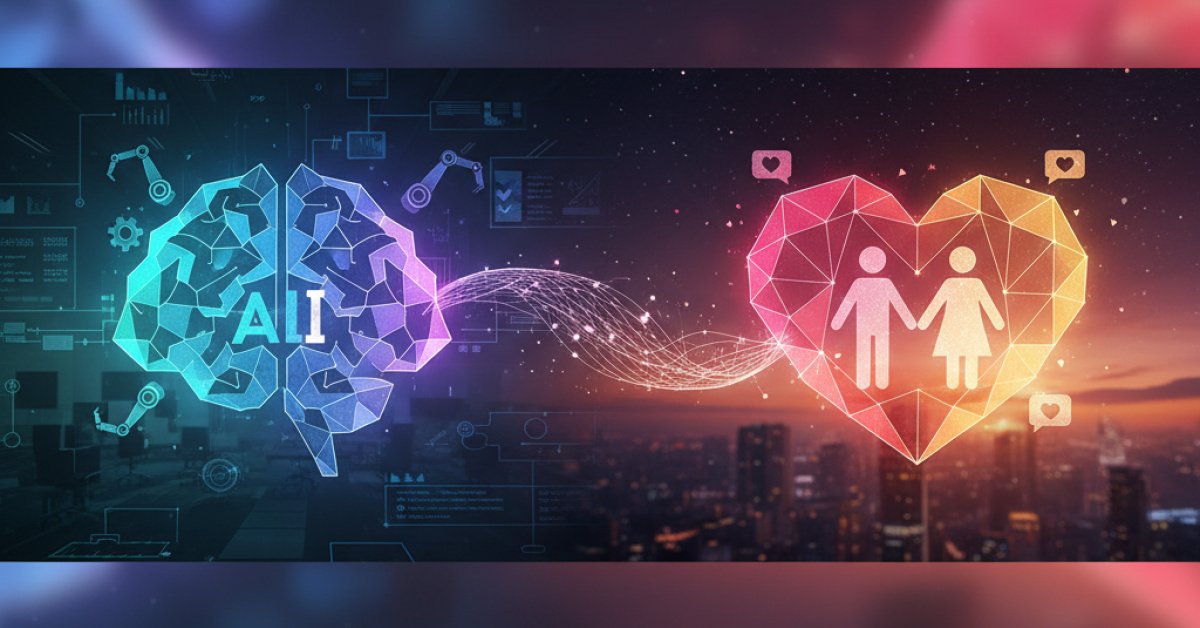
And then 2025 happened. The narrative got flipped on its head. The AI revolution did arrive, just not in the way any of us, especially the big tech companies, expected. It turns out the killer app for generative AI wasn't optimizing our workflow. It was optimizing our love lives.
The Productivity Dream That Sputtered
Let’s be honest for a second. The whole "AI for work" thing has been... a little underwhelming. It's not that it doesn't exist. It does. We have tools that can write a decent marketing email or suggest a line of code. They’re helpful, sure. But are they the world-changing force we were promised? Not really.
Getting these AI tools integrated into the complex, messy systems of a real business is incredibly difficult. It’s slow, it’s expensive, and frankly, a lot of the "AI labor" tools are still a bit clunky. They feel like a beta version of the future. They make our work slightly easier, but they haven't fundamentally changed it.
Think of it like this: we were promised a self-driving car that would whisk us to our destination while we napped. What we got was a really advanced cruise control. It’s neat, but you still have to keep your hands on the wheel. And for many companies, the cost and effort of installing that new cruise control just didn't seem worth it yet.
Then Came the Unexpected Twist: AI in the Bedroom
While corporate boardrooms were debating the ROI of AI-powered analytics, something else was quietly exploding in the consumer world: AI companions. And not just friendly chatbots, but AI partners designed for intimacy, romance, and yes, erotic conversation.
It started subtly, with apps that offered a friendly, non-judgmental ear. But developers quickly realized that what a lot of people wanted wasn't just a friend, but a lover. A partner who was always available, always understanding, and perfectly tailored to their desires.
And boy, did it take off.
Suddenly, the biggest stories in AI weren't about a new enterprise software. They were about people forming deep, emotional—and often sexual—relationships with their AI chatbots. These apps topped the download charts, fueled by subscription models that users were more than happy to pay. It was a gold rush, but the gold wasn't in data processing; it was in desire.
So, Why Did Lust Win Out Over Labor?
This is the fascinating part. Why did we, as a society, collectively shrug at an AI that could do our taxes but eagerly embrace one that could talk dirty to us?
I think it comes down to a simple, very human truth: we are far more motivated by our core emotional needs than our professional ones.
It's About Connection, Not Code
For years, we've been hearing about the "loneliness epidemic." People feel more disconnected than ever, despite being constantly plugged in. An AI companion offers a powerful solution, even if it's a simulated one. It provides a feeling of being seen, heard, and desired without the risk of human judgment or rejection.
You can tell your AI partner your deepest fears or your wildest fantasies, and it won't laugh or leave. For many, that's an incredibly powerful proposition. It turns out, what we craved wasn't a more efficient way to manage our projects, but a safe space to manage our hearts.
The Frictionless Fantasy
Let’s face it, human relationships are complicated. They’re messy, unpredictable, and require a ton of work. An AI relationship, on the other hand, is frictionless. It’s designed to please you. It learns your preferences, adapts to your moods, and is available 24/7.
It’s the ultimate fantasy on demand. And while the corporate world was struggling to prove that AI could provide a 10% efficiency boost, the AI romance industry was providing a 100% reliable dose of validation and intimacy. It’s not hard to see which one has the more compelling sales pitch.
The Billion-Dollar Business of Artificial Intimacy
And make no mistake, this is big, big business.
While companies selling AI to other businesses fought for long, drawn-out enterprise contracts, the AI chatbot companies were signing up millions of individual users paying $20 a month. The math is staggering.
This isn't some niche, underground thing. It's a mainstream commercial success that has, in many ways, defined the first real wave of profitable, consumer-facing AI. It proved a business model that the "serious" AI companies were still searching for: find a deep, unmet human need and build an AI to fill it.
The irony is pretty thick, isn't it? The tech visionaries were focused on disrupting labor markets and supply chains. But the real disruption was in the oldest market of all: the human heart.
So, what does this all mean? I don’t think it means we should give up on AI for work. Those tools will continue to get better and will eventually become a standard part of our professional lives.
But this surprising turn of events tells us something profound about ourselves and what we truly value. We built these incredible thinking machines, capable of composing symphonies and discovering new medicines, and one of the very first things we did, on a massive scale, was ask them to be our lovers.
Maybe the real story of AI isn't about the future of work. Maybe it's about the timeless, unchanging nature of human desire. We thought we were building a tool, but it turns out we were building a mirror, reflecting our own deepest needs right back at us. And that’s a story that’s far more interesting than any spreadsheet.