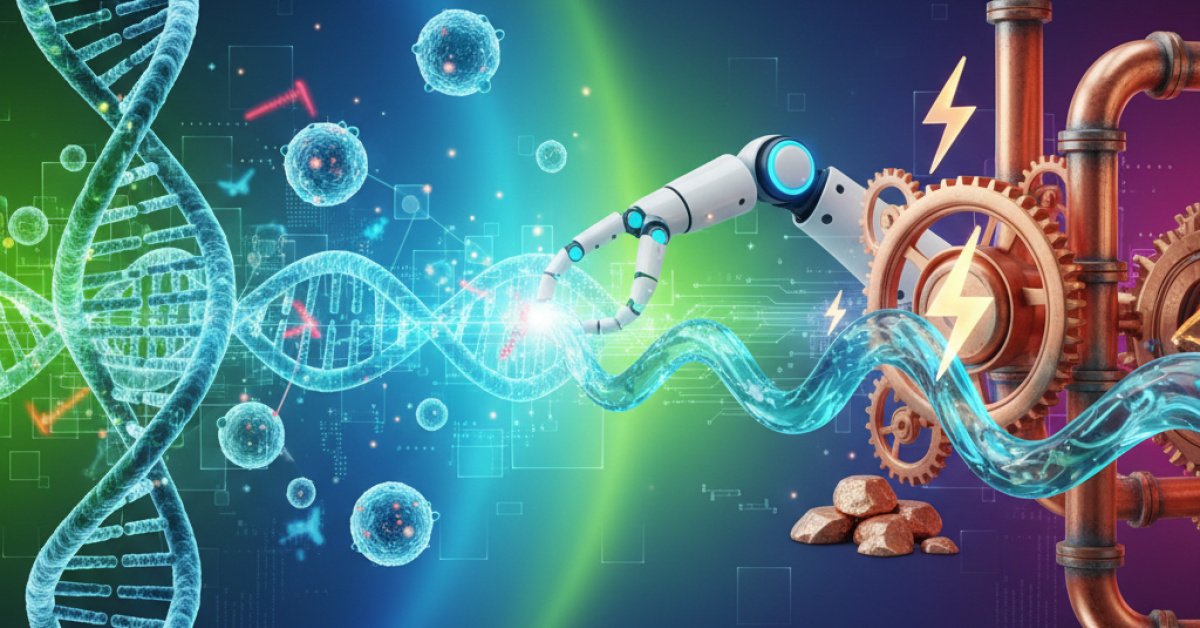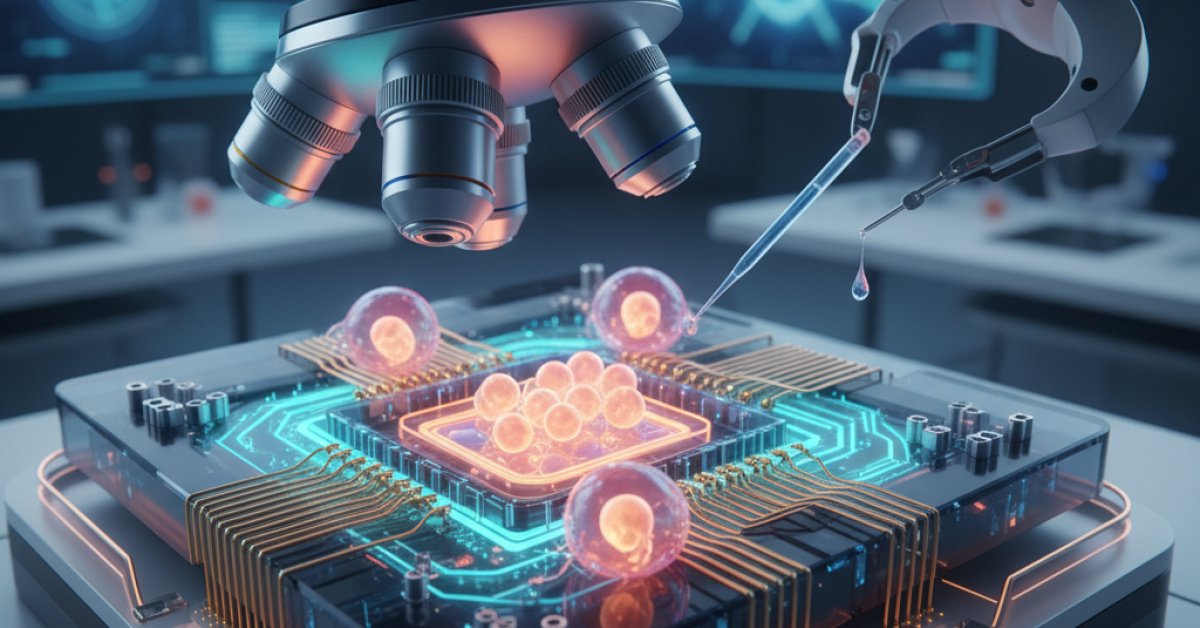
Every year, I geek out over the list of breakthrough technologies that MIT Technology Review puts out. It’s like a sneak peek into the future, and it always gets me thinking. This year, the list was packed with fascinating stuff in energy, AI, and space travel, but honestly, it was the biotech section that really made my jaw drop.
We’re not just talking about incremental improvements here. We’re talking about editing a baby’s genes to save his life, bringing back traits from long-extinct animals, and a technology that lets parents screen embryos for things like height and intelligence.
It sounds like the plot of a sci-fi movie, right? But this is all happening right now. So, let’s grab a coffee and talk about these three technologies, because they’re going to force us to ask some pretty big questions in the next couple of years.
What if we could fix a genetic 'typo' in a living baby?
Let me tell you a story. It’s about a little boy named KJ Muldoon.
In August 2024, KJ was born with a rare genetic disorder that was causing toxic ammonia to build up in his blood. It’s a terrifying, often fatal disease. The best-case scenario for KJ involved a long, uncertain wait for a liver transplant.
But then, his parents were offered a lifeline—a completely experimental gene therapy. Think of it like a biological spell-checker. The treatment, called “base editing,” was designed to find the specific genetic “misspelling” in KJ’s DNA and correct it on the spot.
And you know what? It seems to have worked.
After three doses, KJ is reportedly doing great. He took his first steps in December and got to spend his first Christmas at home instead of in a hospital. It's an incredible, heartwarming story.
This isn't just a one-off miracle, though. The team behind his treatment is already planning a clinical trial for other infants with similar genetic disorders. Their hope is to get regulatory approval based on a small trial, which could make this incredibly expensive treatment (KJ’s cost around $1 million) more accessible, and soon.
Others are jumping in, too. Fyodor Urnov, a gene-editing scientist at UC Berkeley who helped the team with KJ's treatment, co-founded a startup called Aurora Therapeutics. They're aiming to use this same approach for another disorder, phenylketonuria (PKU).
Here’s the really interesting part: they’re trying to get approval for a single drug platform that can then be personalized for different individuals without needing a whole new set of clinical trials for each one. And it looks like US regulators are actually open to the idea, which could open the door for all kinds of "bespoke" therapies. This is a space you’ll want to watch very, very closely.
Is "De-Extinction" really bringing back the dead?
Alright, let's switch gears from saving lives to... well, resurrecting them. Sort of.
You’ve probably heard of Colossal Biosciences. They’re the ambitious, headline-grabbing company that wants to bring back animals like the woolly mammoth and the dodo. It sounds a lot like Jurassic Park, and 2024 was a huge year for them.
First, in March, they announced they’d created what they called “woolly mice.” These were basically regular mice, but with some mammoth-like traits, like furrier coats and curly whiskers. Cool, but not exactly a mammoth.
Then they made an even bigger claim: they’d created three dire wolves. You know, the massive, prehistoric wolves from Game of Thrones? They said they did it by making 20 genetic changes to the DNA of gray wolves, based on DNA they’d recovered from ancient dire wolf bones.
Now, can we really call these animals dire wolves? That’s a huge debate. Most scientists would probably say no. They’re more like genetically modified gray wolves with some dire wolf-inspired features.
But let’s not get too hung up on the branding. The technology itself is what’s truly mind-bending. Scientists are getting incredibly good at pulling ancient DNA from bones and fossils. By analyzing that code, they can learn all sorts of things about our ancestors and the world they lived in.
And when you combine that with modern cloning and gene-editing tools, you can start reintroducing those ancient genes into living species. While bringing back the T-Rex is still firmly in Hollywood territory, this tech has real-world applications in wildlife conservation and even in the (somewhat strange) business of cloning beloved dead pets.
The rise of 'designer babies' is no longer science fiction
Okay, this last one is where things get really complicated and, for many people, pretty uncomfortable.
Let's start with something that’s been around for a while: IVF. In vitro fertilization involves creating embryos in a lab. For decades, doctors have "scored" these embryos to see which ones are most likely to grow successfully before transferring them to a uterus. Totally standard stuff.
Then, technology allowed us to go a step further. Labs could take a few cells from an embryo, analyze its DNA, and screen for major genetic diseases like cystic fibrosis or Huntington's. The list of diseases we can screen for keeps growing.
But now, some companies are pushing the envelope way, way further.
They’re offering prospective parents the chance to select embryos based on complex traits. We’re not just talking about eye color. We’re talking about things like height and even IQ.
A company called Nucleus is one of the players in this space, inviting customers to have their "best baby." And that’s where a lot of alarm bells start ringing.
The controversy here is massive, for a few key reasons:
- The science is shaky. Complex traits like intelligence aren't controlled by a single gene. They’re the result of a mind-bogglingly complex interplay between thousands of genes and countless environmental factors. We just don't understand it well enough. Selecting for one thing might have unintended, negative consequences on another.
- The ethical questions are huge. Critics immediately (and understandably) bring up the word "eugenics." Are we creating a world where only the wealthy can afford to screen for "desirable" traits, creating a new kind of genetic class divide?
- It’s a false promise of control. At the end of the day, no matter which embryo you choose, you can’t control who your child will become. And honestly, why would you want to? The beautiful, messy, unpredictable journey of parenthood is part of what makes it so human.
Despite all this, the service exists, and people are interested. This technology forces us to confront some of the most profound questions about what it means to be a parent and what we value as a society.
So there you have it. We're living in an age where we can fix life's code, resurrect ghosts from the past, and start designing our future generations. It’s an incredible, powerful, and frankly, a little bit terrifying time to be alive. The technology is moving faster than our ability to have these crucial conversations, but we need to start having them now.