Phew, is it hot out there or is it just me? As we head into another sweltering summer, I'm guessing your air conditioner is already putting in some serious work. Mine sure is. And while it’s a lifesaver, there’s always that little nagging feeling, right? We all know that traditional AC is an energy hog and not exactly great for the planet.
In fact, air conditioning is responsible for a whopping 7% of all electricity we use globally and about 3% of greenhouse gas emissions. That's... a lot.
With heat waves becoming the new normal, we're stuck between a rock and a hot place. We need to stay cool to stay healthy, but we also need to protect our world. So, what if there was a completely different way to cool things down?
Could We Cool Our Homes Without the Guilt?
A bunch of very smart scientists and ambitious startups are working on exactly that. They’re looking at something called "solid-state cooling," and it’s a fascinating idea.
Instead of using chemical refrigerants and compressors like your current AC unit, these systems move heat through special conductive materials. Think of it like a high-tech heat sponge that can cool down a room, a surface, or even your phone without all the messy side effects. It’s a cleaner, quieter, and potentially much more efficient way to beat the heat.
The big question, of course, is whether this new tech can actually compete with the cooling power we’re used to. Traditional AC has had a century-long head start. But the push to dial down our emissions is stronger than ever, and these unconventional coolers might just be our best shot at a chill, sustainable future. It’s definitely one to watch.
From Big Pharma to Healing Nature with AI
Speaking of using technology for good, I came across a story that really stuck with me. It’s about a chemist named Tim Cernak.
After spending nearly 20 years in Big Pharma, Tim decided to pivot in a big way. As a lifelong nature lover, he was bothered by a problem most of us have never even thought about: we often treat sick animals with human drugs. And sometimes, those drugs can do more harm than good, or even be lethal.
So, in 2018, he decided to create a whole new field he calls “conservation chemistry.”
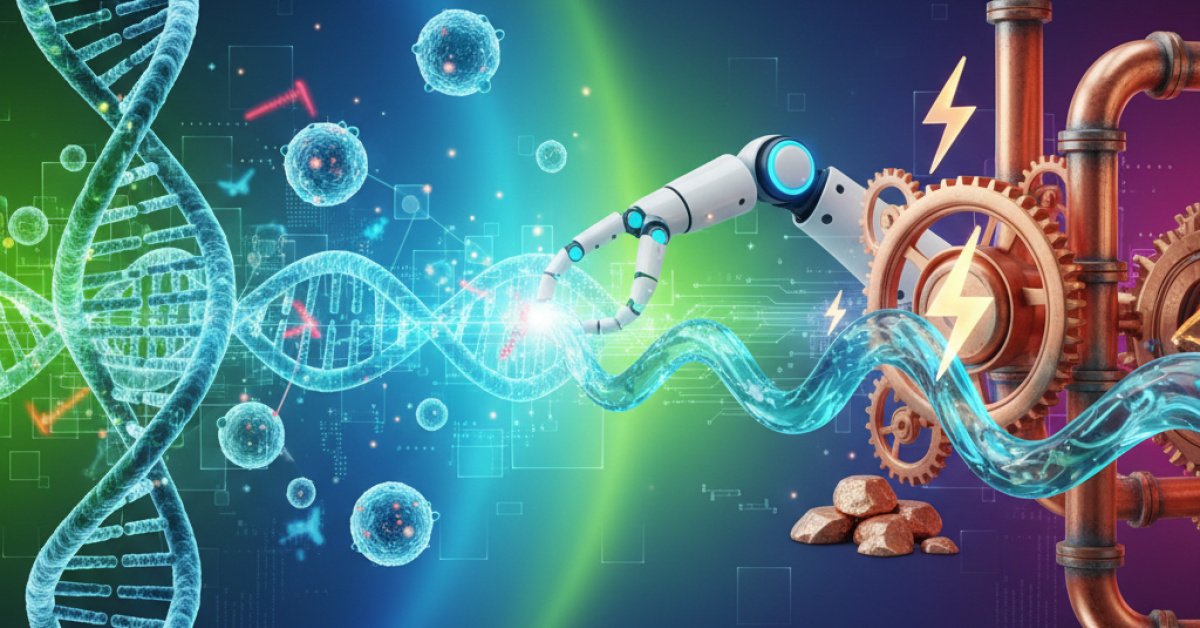
What does that look like? He’s using AI tools and robotics to rapidly design and test new drugs specifically for animals. It’s an incredible blend of high-tech chemistry and a deep passion for conservation. He’s essentially becoming a drug designer for nature's patients, and it's a powerful reminder of how AI can be used to solve problems in the most unexpected places.
Your Weekly Roundup of What’s Happening in Tech
Alright, beyond the big ideas, there’s always a ton happening week to week. Let’s do a quick-fire round of the other stories that caught my eye.
The AI World is Getting Shaky There’s some major drama with Anthropic, one of the big AI players. Following a US directive, the company has shut down access to its most powerful models, Fable 5 and Mythos 5, for all foreign users. Since they can't filter users in real-time, they just pulled the plug globally. This move has a lot of cybersecurity experts pretty upset, with one open letter stating, "This action has taken the best models away from defenders, created market uncertainty, and risked America’s AI leadership without any real risk to justify it." Oof.
Kids and Social Media: The UK Says No The UK is planning to ban social media for anyone under 16. We don't have all the details yet, but it's set to take effect in early 2027 and would cover all the big names: TikTok, Instagram, Snapchat, you name it. They're not the only country looking at curbs like this, so it seems a global conversation is heating up.
Which Came First: The Black Hole or the Galaxy? Here’s a fun one for the space nerds. New data suggests that massive black holes might have actually formed before the galaxies that surround them. It’s a potential answer to one of cosmology's biggest chicken-and-egg questions.
Are Layoffs Really AI's Fault? We keep hearing that AI is coming for our jobs, but a lot of people are starting to get skeptical. There's a growing sense that companies might be using AI as a convenient excuse for layoffs that would have happened anyway. Something to think about.
OpenAI Under the Microscope A coalition of states has opened an investigation into OpenAI. They’re looking into a range of issues, including how the company handles user data, child safety, and its advertising practices. It seems the regulatory scrutiny on the big AI labs is only just beginning.
Tesla's "Full Self-Driving" Claims Questioned Tesla is in hot water again, this time accused of misleading regulators about the safety of its "full self-driving" feature. The accusation is that they exaggerated the safety stats to make the system look better than it is.
NASA's Supersonic Jet Hits a Milestone Remember the Concorde? NASA is working on a "quiet supersonic" plane called the X-59, designed to fly faster than sound without that window-shattering sonic boom. It just hit some critical milestones, reaching 924 mph at 55,000 feet, bringing us one step closer to super-fast flights over populated areas.
Deepfakes are Getting Weirder (and Harder to Spot) With the midterms coming up, deepfakes are becoming a bigger problem. Thanks to free and easy-to-use AI tools, it's getting tougher to tell what's real and what's not, and the fakes are getting stranger.
AI, the Animal Whisperer On a cooler note, AI is being used to reveal the secret lives of animals. By analyzing massive amounts of data, researchers can trace their movements, identify social structures, and learn about their habits in ways we never could before.
Where Did Earth’s Water Come From? Ever wonder where our oceans came from? The old theory was that they were delivered by comets and asteroids. But now, some scientists suspect that Earth’s water is actually homegrown—that the planet made its own oceans. How cool is that?
And Now for Something Completely Sci-Fi…
Just when you thought we'd covered it all, let's talk about turning back the clock. For real.
About 15 years ago, scientists in Japan made a wild discovery. They took a regular skin cell, added just four specific proteins, and waited. After a couple of weeks, something incredible happened: some of the cells became young again. They essentially reset themselves.
This process is called "cellular reprogramming," and for over a decade, biotech companies and researchers have been trying to figure out if it could work on a larger scale. The dream? A technology that could actually reverse human aging. We’re not there yet, but the initial hints are tantalizing. It feels like something straight out of a movie, but it’s happening in labs right now.
Let's End on a High Note
Okay, that was a lot of heavy tech and mind-bending science. Before you go, I always like to share a few things that just made me smile.
- Ever wonder why the T-Rex had such tiny, goofy arms? Evolutionary biologists think they might have finally figured it out.
- Someone designed a beautiful, sustainable bento box that could finally eliminate all that single-use takeout waste.
- There’s a site called The Last Museum where you can search through 5.8 million works of art, from 3000 BC to today. Go get lost in some history.
- And finally, check out this stunning cosmic photo of Thor’s Helmet, a massive bubble of interstellar gas sitting 15,000 light-years away.
It’s a good reminder that even as we build the future, there’s still so much wonder to be found in the world—and universe—around us. Talk to you next time.