It feels like we’re living through a decade of technological change every single week. One minute, we're talking about the fundamental code of human biology, and the next, we're debating whether a new web browser could finally topple Google's empire. It’s a whirlwind of breakthroughs, ethical dilemmas, and just plain weird innovations that are reshaping our world in real-time.
This isn't some far-off sci-fi future; it's happening right now. From the frozen plains of Antarctica to the DNA in our cells, technology is rewriting the rules. So, grab a coffee and let's unpack the incredible, the controversial, and the downright fascinating developments that are defining our moment. We’ve got a lot to cover, from AI's identity crisis to the very future of the human body.
Redefining What It Means to Be Human
Let's start with the big one: us. For centuries, the human body has followed a biological script written by evolution. But a new wave of scientific and technological tinkering is threatening to rip that script to shreds. We're on the cusp of being able to edit, predict, and perhaps even redesign our own biology.
MIT Technology Review’s latest issue dives deep into this, and the questions it raises are staggering.
The Designer Baby Dilemma
Imagine being able to screen embryos not just for genetic diseases, but for aesthetic traits, intelligence, or even moral character. A new field of science claims this is on the horizon. Is this the next logical step in human evolution, a way to give our children the best possible start? Or is it a terrifying slide into a new era of eugenics, creating a society of genetic haves and have-nots? There are no easy answers here.
Can We Stop the Clock on Aging?
At the same time, scientists are getting closer to understanding why we age. They're using "aging clocks" to measure our biological age versus our chronological one. The ultimate goal? Figuring out if the aging process can be slowed, stopped, or even reversed. It’s a quest that could fundamentally change what it means to live a long life.
Building Bodies from Scratch
And if that’s not mind-bending enough, consider this: instead of relying on nature’s recipe, stem-cell scientist Jacob Hanna is coaxing the beginnings of animal bodies directly from stem cells. It’s a revolutionary approach that bypasses the traditional biological process entirely. The potential is immense, but the ethical questions are just as big. Should we be creating life in a petri dish this way?
It’s not all about high-tech labs, either. Even our own bodies hold incredible secrets. New research is digging into how our muscle cells create a "memory" of exercise, learning to become more efficient the more we move. It’s a beautiful reminder of the sophisticated machine we already inhabit, even as we seek to upgrade it.
The AI Arms Race: Browsers, Bias, and Bots
While some are focused on our internal code, the tech giants are battling over the code that runs our digital lives. And this week, the battlefield got a whole lot more interesting.
OpenAI Comes for Google's Throne
Just when you thought the browser wars were a relic of the '90s, OpenAI has entered the chat. They've launched their own web browser, reportedly called Atlas, and it’s a direct shot at Google's biggest cash cow: search.
Built on Chromium (the same open-source engine as Chrome), Atlas isn't just a browser; it's a conversational interface for the web. It features an "Ask ChatGPT" sidebar and an "agent mode" designed to complete tasks for you. OpenAI is betting that the future of browsing isn't typing keywords into a search bar, but having a conversation with an AI that finds and does things for you.
As investor Nikunj Kothari pointed out on X, there's a deep irony here: “It’s wild that Google wrote the Transformers paper (that birthed GPTs) AND open sourced Chromium, both of which will (eventually) lead to the downfall of their search monopoly. History lesson in there somewhere.”
The Great AI Identity Crisis
As AI models become more powerful, their creators are facing intense scrutiny. Anthropic, a major OpenAI rival, is promising its AI is "not woke," pushing back against claims from political figures. Its CEO even insists the company's goals align with the Trump administration's. This highlights a massive challenge: is it even possible to build a truly unbiased AI? The data we train them on is inherently human and full of our own biases.
This debate is happening while some of the very pioneers of AI, including Geoffrey Hinton and Yoshua Bengio, are calling for a ban on superintelligent systems. They, along with prominent Chinese scientists, are worried that we're building something we won't be able to control. It's a stark warning from the people who know this tech best.
The Rise of "AI Slop"
Meanwhile, on the internet's front lines, the battle against AI-generated garbage is getting intense. Reddit, long seen as an oasis of human conversation, is fighting a tidal wave of bots and low-quality AI content, or "AI slop."
It's a problem that extends beyond social media. Employers are now worried about "workslop," as AI-generated reports and communications flood the workplace. The core issue is simple: when you train AI on garbage generated by other AIs, you just get more, weirder garbage.
Tech's Global Chessboard
These technological shifts aren't happening in a vacuum. They're playing out on a global stage, with nations and corporations vying for dominance.
The Chip War and China's Fixation
The tension between the US and China is palpable. China is now demanding American chip firms share their sales data as part of a probe into suppliers. It's another move in the high-stakes chess game for semiconductor supremacy.
At the same time, Silicon Valley remains fixated on China, marveling at its ability to "move fast and break things" on a national scale. But the admiration is complex, tangled up in questions about ethics, government control, and what it truly means to innovate.
Connecting the Ends of the Earth
In a more hopeful story of global connection, Antarctica's long history of isolation is finally ending. Thanks to Starlink, Elon Musk's satellite internet service, scientists and staff on the frozen continent can now communicate with the outside world in ways that were impossible just a few years ago.
A construction specialist at New Zealand’s Scott Base recently posted a video tour of Ernest Shackleton’s 1907 expedition hut that went viral, racking up millions of views. It was a simple, beautiful moment made possible by a constellation of satellites, connecting one of the most remote places on Earth to the rest of us.
AI in the Wild: From Cute Pets to Serious Protection
Beyond the grand geopolitical dramas, AI is seeping into our daily lives in tangible, sometimes strange, ways.
YouTube, for instance, has launched a likeness detector to help foil AI-generated doppelgängers and deepfakes. It's a necessary tool in the fight against misinformation, but it doesn't guarantee that fake videos will be removed, highlighting the ongoing policy challenges.
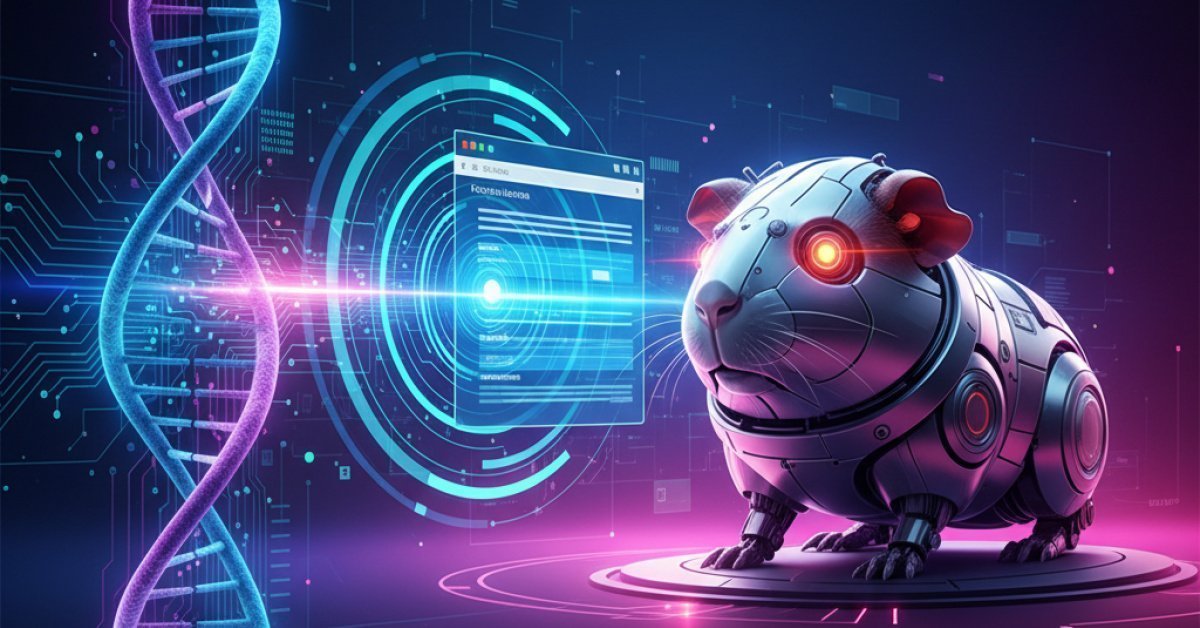
On the lighter side, have you ever wanted an AI-powered pet that looks like a guinea pig? Well, now you can have one. Moflin is a cute, furry creature that uses AI to learn and become more expressive over time. These AI toys are already huge in China and are now making their way to the US.
But AI's real-world impact can also be life-saving. As climate change leads to more extreme heat, farmworkers face dangerous conditions. Researchers are now developing an innovative sensor that tracks a worker's vital signs to anticipate heat illness and issue an alert. It’s a brilliant application of technology to protect some of our most vulnerable workers.
And if you're feeling a bit of tech-induced imposter syndrome, here's a surprising tidbit: you don't actually need to be a deep AI expert to get a job in the AI industry. As the field expands, it needs people with all kinds of skills, from marketing to project management. Make of that what you will.
Our Planet, Our Problem: Tinkering with the Climate
Finally, we have to talk about the biggest challenge of all: climate change. As the crisis deepens, some scientists are looking to more radical interventions.
There's growing expectation that we'll see more attempts at solar geoengineering—essentially, trying to cool the planet by reflecting sunlight back into space. But this is an incredibly risky idea. The potential for unintended, catastrophic repercussions is enormous, and as Harvard’s failed experiment showed, the path forward is fraught with scientific and ethical hurdles.
It’s a sobering reminder that for all our cleverness, we're still grappling with the consequences of our own actions on a planetary scale. While we're busy building new digital worlds and redesigning our biology, the physical world we all share needs our urgent attention.
And yet, even in this complex, chaotic, and often-concerning world of tech, we can still have nice things. Netflix is making a movie based on the board game Catan, people are rediscovering the joy of slow running, and a project is turning satellite images of nature into crayons. It’s a good reminder to look up from the screen once in a while and appreciate the simple, creative, and beautiful things that make being human so worthwhile.