It feels like magic, doesn't it? You type a question into a chat window, and a thoughtful, well-written answer appears in seconds. You describe a surreal dream to an image generator, and a stunningly detailed piece of art materializes on your screen. This is the promise of AI, delivered. It's instant, intelligent, and feels almost weightless, as if plucked from the digital ether.
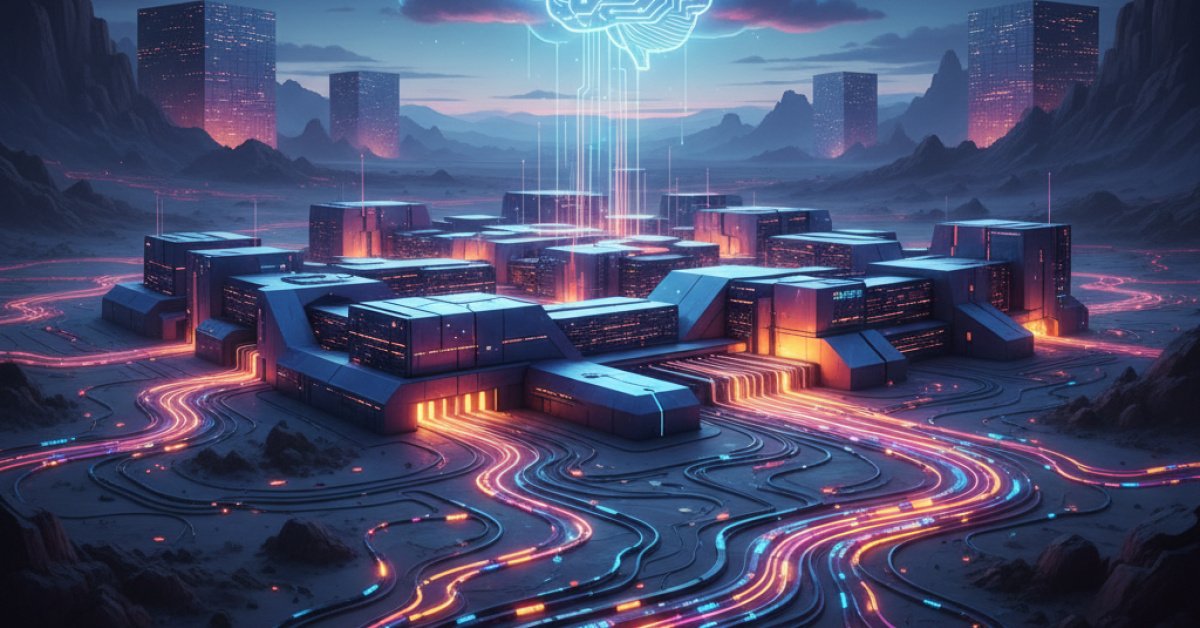
But behind this seamless experience is a colossal, power-hungry machine. The magic isn't happening in a cloud; it's happening in massive, warehouse-sized data centers packed with tens of thousands of specialized computer chips, all running hot and consuming an astonishing amount of electricity. That "weightless" AI response has a very real, very heavy physical footprint.
So, what's the real cost of your next AI prompt? The answer is far more complex and frankly, more alarming than most of us realize. It's a story of staggering upfront energy investments, a death-by-a-billion-queries consumption model, and a future where AI's thirst for power could strain our energy grids and our planet. Let's pull back the curtain and do the math.
The Billion-Dollar Energy Bill: What It Takes to Train an AI Model
Before an AI can answer a single question, it has to go to school. A very, very intense school. This process, called "training," is where the foundational models like GPT-4 or Claude 3 are built. Think of it like trying to teach a person everything by having them read a significant chunk of the entire internet.
This isn't a metaphorical library. It's a brute-force computational process where the model analyzes trillions of words, images, and data points to learn patterns, context, and language. To do this, companies use thousands of high-powered, specialized processors (GPUs) running simultaneously, 24/7, for weeks or even months on end.
The energy required for a single training run is astronomical. Reports suggest that training a model like GPT-3 consumed an estimated 1,287 megawatt-hours of electricity, producing a carbon footprint equivalent to flying round-trip from New York to San Francisco hundreds of times. And here's the kicker: that was years ago. Today's models are vastly larger and more complex, requiring exponentially more power to train. This is the massive, upfront energy cost that’s sunk into the model before you ever type your first prompt. It’s the ticket price for entry, and it’s getting more expensive with every new generation of AI.
That "Simple" Query Isn't So Simple
Okay, so the training is a huge one-time energy hit. But what about the day-to-day usage? The industry often points out that the energy for a single AI query—what's known as "inference"—is relatively small. And on its own, it is. But that’s a dangerously misleading way to look at it.
A single AI chat query is estimated to consume, on average, ten times more electricity than a simple Google search. That might not sound like much, but let's put it in perspective.
The Hidden Math: From One Prompt to Billions
The problem isn't one query; it's the scale. ChatGPT alone handles billions of queries. When you add in all the other AI tools, APIs, and integrated features across countless apps, you're looking at a torrent of energy consumption that's growing at a breathtaking pace.
It's the classic "death by a thousand cuts" scenario, or perhaps more accurately, "a global flood made of individual drops." Focusing on the energy cost of a single "drop" of water completely misses the fact that we're standing in a rapidly rising tide. Companies aren't always transparent about their total energy usage for inference, making it incredibly difficult to track the true scale of the problem. What we do know is that as AI becomes more integrated into our daily lives, this cumulative energy demand is set to explode.
Image and Video: Upping the Energy Ante
If a text query is a sip of water, generating an image with a tool like Midjourney or DALL-E is more like chugging a gallon. The computational power required to create a unique, high-resolution image from a text prompt is orders of magnitude greater than that needed for text.
And the next frontier, AI video generation, is even more demanding. Tools like OpenAI's Sora, which can create realistic video clips from a simple description, represent a monumental leap in capability—and a corresponding leap in energy consumption. Each second of generated video requires an immense amount of processing, making it one of the most power-hungry AI applications yet. As these tools become more popular and accessible, they will dramatically increase AI's overall energy footprint.
Not All Kilowatts Are Created Equal: The Fuel Behind the AI Boom
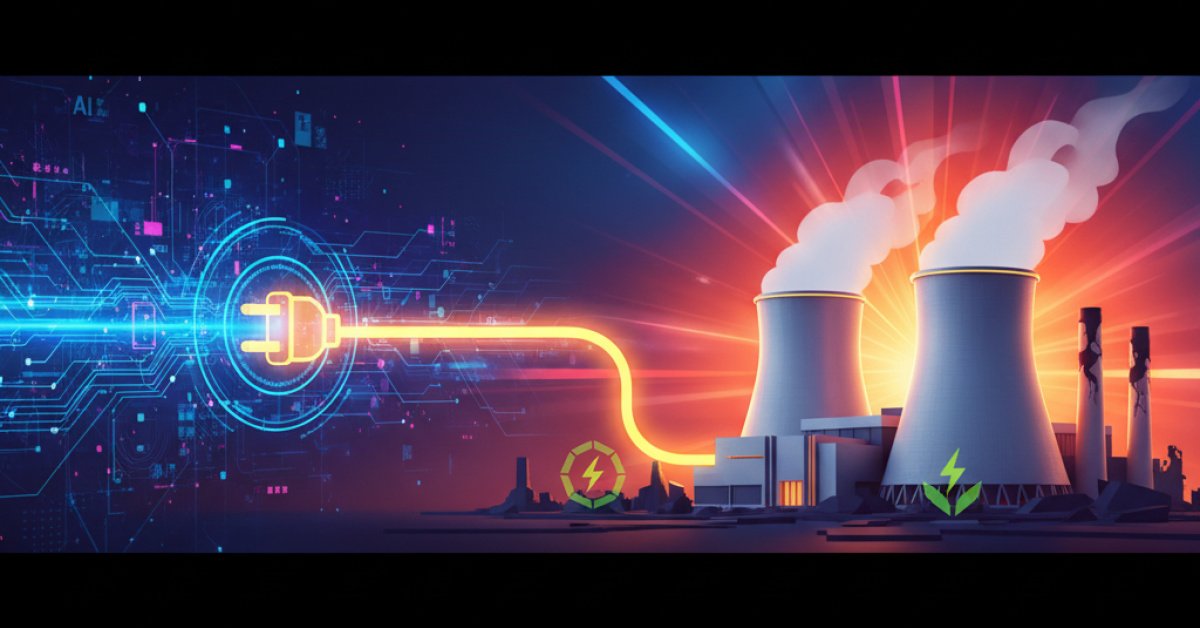
So we know AI uses a ton of energy. The next critical question is: where is that energy coming from? The answer largely depends on where the data centers are located.
While tech giants have made significant investments in renewable energy, the reality is that many data centers are still plugged into electrical grids powered by a mix of sources, including a heavy reliance on fossil fuels like natural gas and coal. A data center in Virginia, a major hub, will have a different carbon footprint than one in Iceland that runs on geothermal power.
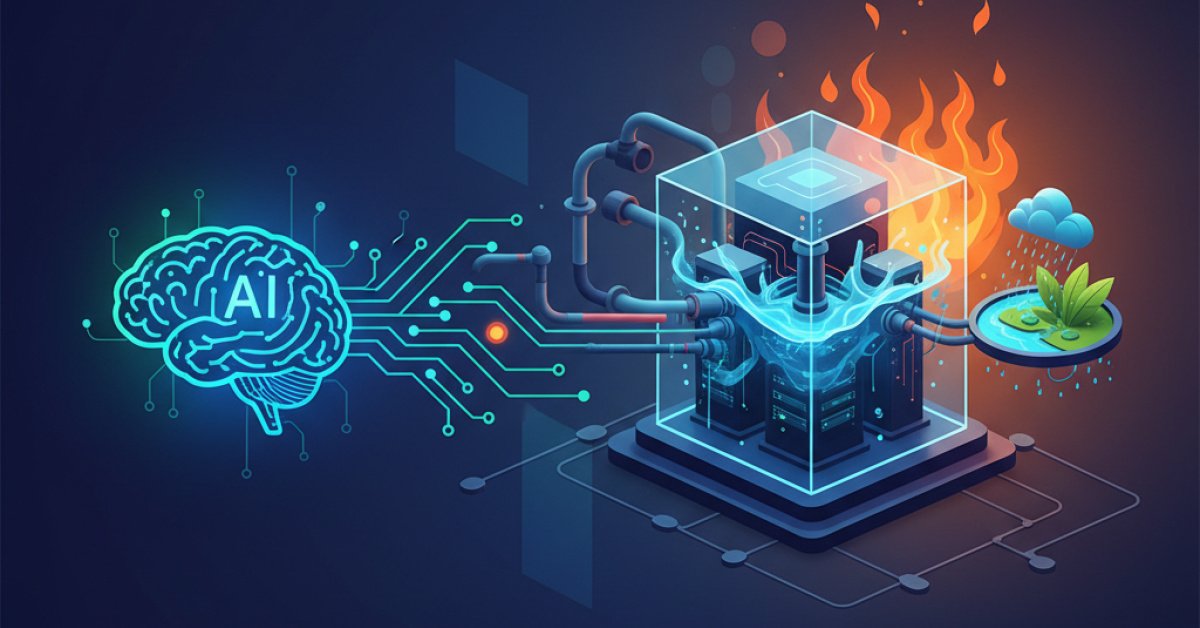
Furthermore, it's not just about electricity. These server farms generate an incredible amount of heat, and they need to be kept cool to function. This often involves massive water-cooling systems. In an already water-stressed world, the amount of fresh water consumed by data centers is becoming a serious environmental concern in its own right. We're not just burning fuel; we're boiling water to keep the AI revolution from overheating.
The AI Tsunami: Are We Prepared for the Coming Energy Surge?
If the current state of AI's energy consumption is concerning, the future trajectory is downright alarming. The race for AI dominance is leading to a relentless cycle of bigger, more powerful models that require ever-increasing amounts of data and computational power to train and run.
Some projections are staggering. Researchers have estimated that by 2027, the AI industry could consume as much electricity annually as a country the size of Sweden or Argentina. This isn't a slow, manageable increase; it's an exponential curve that threatens to place an unprecedented strain on our global energy infrastructure.
We're embedding AI into everything—search engines, customer service bots, software development, creative tools, and personal assistants. This widespread adoption means the number of daily queries will continue to multiply. Are our power grids ready for this tsunami of demand? Can we build out renewable energy sources fast enough to keep pace? These are no longer theoretical questions; they are urgent challenges that the tech industry and policymakers need to address right now.
Taming the Beast: Can We Build a Greener AI?
Facing these numbers can feel a bit bleak, but the goal isn't to stop AI in its tracks. The potential benefits of this technology are too significant to ignore. The real challenge is to pursue innovation responsibly. We need to tame the energy beast before it gets out of control.
Fortunately, smart people are working on this. The path to a more sustainable AI involves a multi-pronged approach:
- Smarter, Not Just Bigger: The race for ever-larger models is inefficient. Researchers are developing techniques like "model distillation" and quantization to create smaller, highly optimized models that can perform specific tasks with a fraction of the energy.
- Efficient Hardware: Companies like NVIDIA, Intel, and a host of startups are in an arms race of their own to design chips that deliver more computational power per watt. Hardware innovation is a key part of solving the efficiency puzzle.
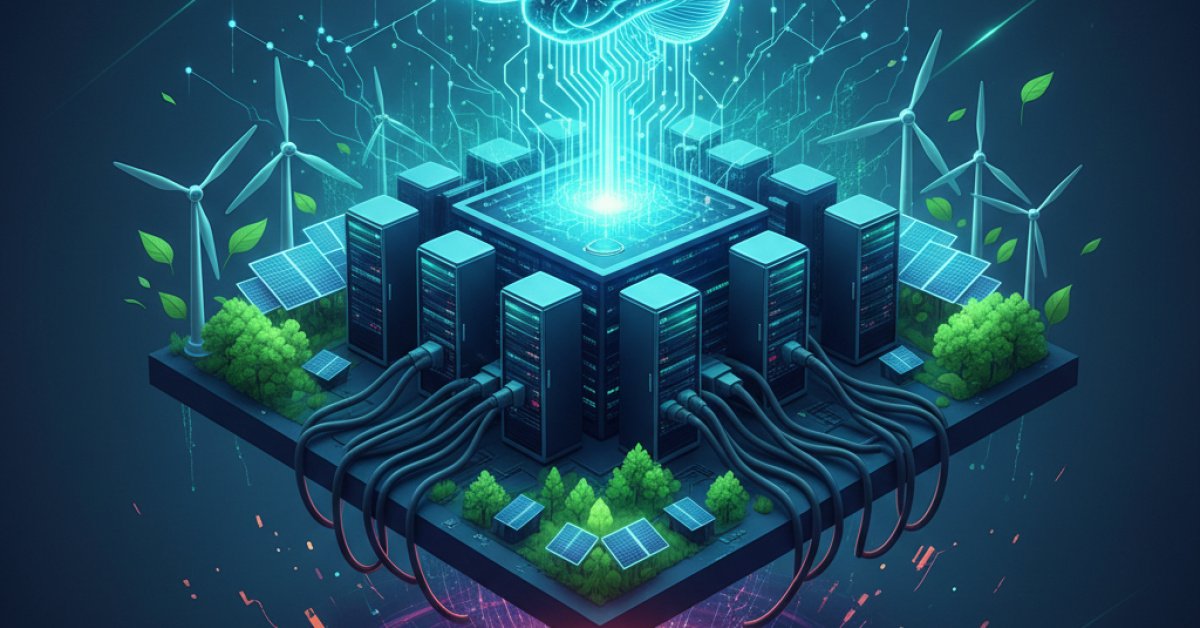
- Full-Stack Renewables: It's not enough to buy renewable energy credits. The future requires data centers to be strategically located and directly powered by renewable sources like solar, wind, and geothermal, 24/7.
- Radical Transparency: We can't fix what we can't measure. Tech companies need to be far more transparent about the energy consumption and carbon footprint of their AI models, from training through inference. This accountability is the first step toward driving real change.
The magic of AI is undeniable, but it's powered by very real-world resources. As we stand at the dawn of this transformative era, we have a choice. We can either continue down a path of unchecked energy consumption or we can consciously build an AI ecosystem that is as efficient and sustainable as it is intelligent. The true test of our brilliance won't just be creating artificial intelligence, but doing so with the wisdom to protect our own planet.