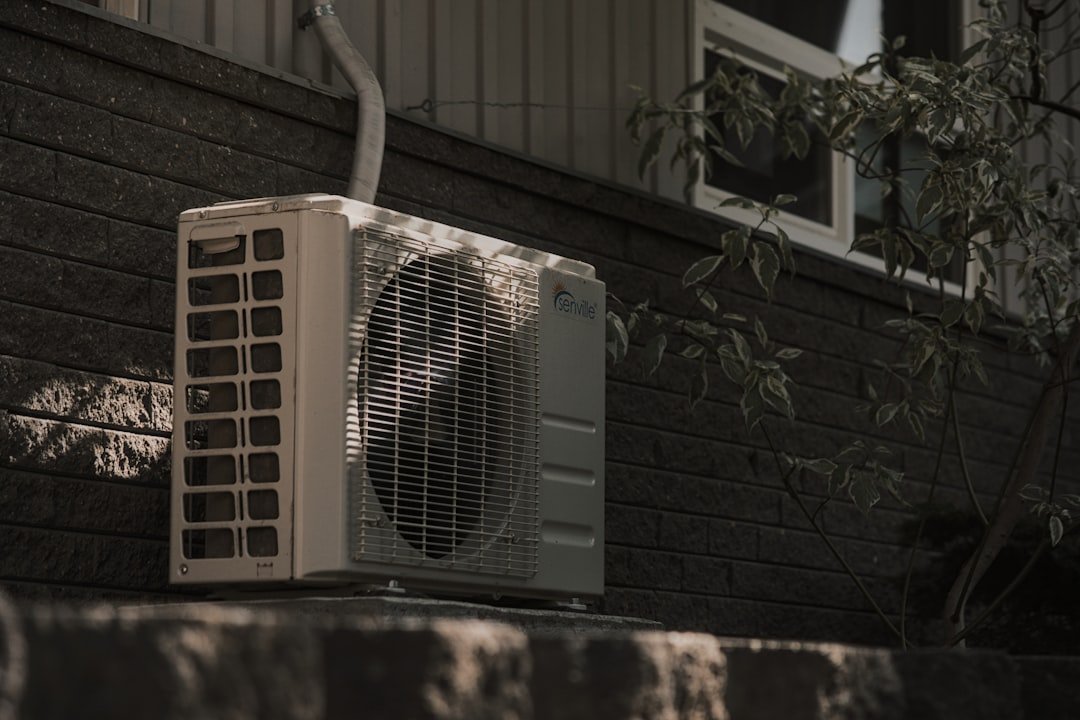
I know, I know. It’s the middle of a heatwave, my air conditioner is working overtime, and the last thing anyone wants to talk about is a heating appliance. Seriously, just thinking about a furnace right now makes me sweat.
But we need to talk about heat pumps.
Because something really fascinating is happening with them right now. These devices, which use electricity to heat and (bonus!) cool our homes with incredible efficiency, have been on an absolute tear. Sales in the US have doubled over the last 15 years. In fact, for the first quarter of this year, they outsold natural gas furnaces by a whopping 32%.
Here’s the kicker, though. A key federal tax credit—up to $2,000 back in your pocket for installing one—just disappeared at the end of 2025. Logic dictates that when you pull the financial rug out from under a product, sales should take a nosedive. But they haven't. And that’s where this story gets really interesting.
First, a Quick Refresher on What These Things Actually Do
Before we get into the mystery, let's make sure we're on the same page. What exactly is a heat pump?
Forget everything you know about traditional furnaces that burn stuff to create heat. A heat pump is more like a heat mover. Think of it like your refrigerator, but for your whole house. A fridge doesn't create cold; it just uses a refrigerant cycle to move heat from inside the box to outside the box, leaving the inside cool.
A heat pump does the exact same thing, just on a bigger scale. In the winter, it pulls heat from the outside air (yes, even when it's cold!) and moves it inside your home. In the summer, you can just run it in reverse, and it'll pull heat from inside your house and dump it outdoors, acting as a super-efficient air conditioner.
The upshot? It's a game-changer for efficiency. Since you’re not generating heat from scratch, just moving it around, you get way more heating (or cooling) for every kilowatt of electricity you use. This means lower energy bills for you and a massive win for the planet by cutting down on fossil fuels.
The Plot Twist: The Big Incentive Vanished
Okay, so these things are great. But they can also have a higher upfront cost than a traditional gas furnace. That initial price tag can be a tough pill to swallow, which is why governments have been offering incentives to nudge people in the right direction.
In the US, from 2023 through 2025, you could get a tax credit of up to $2,000 for installing a new heat pump. But that program, part of the 2022 Inflation Reduction Act, was cut by the Trump administration and officially ended on January 1, 2026. No more cash back.
Honestly, I’ve seen this movie before, and I thought I knew how it ended.
Remember what happened with electric vehicles? A similar tax credit of up to $7,500 ended on September 30, 2025. In the months leading up to that deadline, there was a mad dash. Dealerships were packed, sales shot through the roof, and then… thud. Sales fell off a cliff. They’re starting to recover now, but it was a textbook example of what happens when you remove a major incentive.
So, everyone in the industry was bracing for the same thing with heat pumps. We all held our breath, waiting for the sales numbers to crater.
But Here's the Thing: The Sales Didn't Tank
The crash never came.
In fact, the numbers for the first few months of 2026 show that the market is... completely fine? It’s actually a little bit stronger.
Lucas Davis, an energy economist and professor at UC Berkeley, dug into the data and pointed this out in a recent analysis. He looked at shipment numbers from the Air Conditioning, Heating, and Refrigeration Institute (a group that represents about 90% of the US market) and found something surprising.
Shipments were flat from December to January—right when the credit expired—and have been on a gradual rise ever since. This little bump from winter into spring is a normal seasonal trend we see every year. The wild part is that the trend is actually a bit stronger in 2026 than in previous years.
This is not what you’d expect to see if losing a $2,000 credit was a dealbreaker for people.
As Davis puts it, it seems like the tax credit wasn’t the main driver convincing people to make the switch. The case for heat pumps was already strong enough on its own. “It appears that the U.S. market for heat pumps is strong enough that it does not depend on tax credits,” he wrote.
The Era of the Heat Pump Is Officially Here
This is a huge deal. It tells us that we’ve reached a tipping point. The training wheels are off, and the technology is pedaling on its own.
Back in 2024, my colleagues at MIT Technology Review put heat pumps on our annual list of breakthrough technologies. At the time, I wrote, "We've entered the era of the heat pump." It seems that era is going strong. For the last four years, heat pumps have consistently outsold gas furnaces in the United States.
And this isn't just an American phenomenon. We're seeing a massive shift toward heat pumps in countries all over the world, from China to Germany.
Look, getting a whole country to change the fundamental way it heats and cools its homes is a monumental task. The path to adopting any new technology is never a straight line; there are always going to be bumps and policy changes along the way.
But the fact that this crucial tool for decarbonizing our buildings is thriving on its own merits? That’s incredibly encouraging. It shows that sometimes, a technology is just so fundamentally better—cheaper to run, better for the environment, more comfortable—that it builds its own unstoppable momentum. And that’s a story worth telling, even on a hot summer day.